ALHAMA DE MURCIA
Cerrado temporalmente

C/ Sánchez Vidal, 5
30840 - ALHAMA DE MURCIA
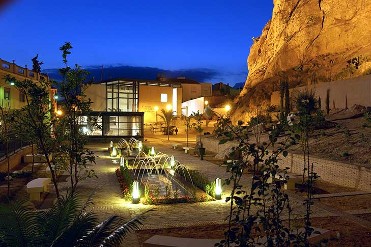
Temporarily closed for renovation work, efficiency improvements and museum digitisation, The Museo Arqueológico de Los Baños is an on-site museum, created to preserve and protect the archaeological remains of the Baths of Alhama de Murcia. Its restoration and development has meant an important contribution to the study of hydrotherapy and its architecture throughout different periods of its history. The thermal complex has restored its original areas through a series of renovation projects and adaptations, creating a modern building, a garden area with water at the forefront and the inside museological preservation of the remains, showing thematic sections about different cultures. Its architecture is an example of conservation of heritage, in the same complex, from Roman rooms, to their reuse in the Islamic and Christian periods, until the construction of the new Hotel Spa in the 19th century. In 1983 its archaeological remains were declared a Historical Artistic Monument of National Character and in May 2008 it was included in the Region of Murcia’s Museum Network. The Museum hosts the Archaeological Collection and Municipal Ethnographic of Alhama.
CARTAGENA

Paseo Alfonso XII, 22
30201 - CARTAGENA
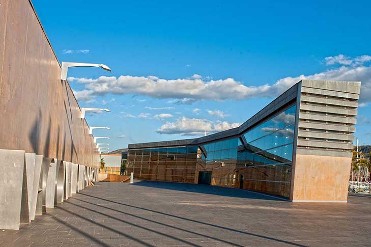
ARQUA Museo Nacional de Arqueología Subacuática is the institution in charge of studying, valuing, investigating, preserving, disseminating and protecting the Spanish underwater cultural heritage. Furthermore, the ARQUA takes charge of the Odyssey’s treasure. The Nuestra Señora de las Mercedes frigate collection, which consists of more than 570,000 gold and silver coins from the late 18th century and the beginning of the 19th century. ‘PHENICIANS, Merchants of the Sea’ - Temporary Exhibition from 19 November 2025 to 24 May 2026 The site, discovered in the 1950s on the coast of San Javier (Murcia), has proven to be of extraordinary importance for studies of Phoenician society. Currently, of the six Phoenician shipwrecks excavated and studied in depth in the Mediterranean, three have been found on the Spanish coast, specifically in the Region of Murcia: two located in the bay of Mazarrón and the third in the municipality of San Javier, to which this exhibition is dedicated. Thanks to the excavation of this wreck, it has been possible to confirm several key aspects, such as the existence of Phoenician trade routes along the regional coastline, the exploitation of the Iberian Peninsula's natural resources, the cultural influence exerted on local communities, and the consolidation of a complex exchange system that connected the entire Mediterranean. The significance of these findings has transcended national borders, placing Bajo de la Campana at the centre of international conferences, symposiums and studies for several decades.
CIEZA
C/ San Sebastián, 17
30530 - CIEZA
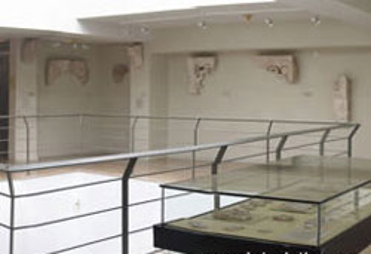
Opened in May 1999, it houses a magnificent sample of the archaeological patrimony of Cieza. It consists of four levels with a splendid sample of the archeological and ethnographic legacy of our territory, wich invites the visitor to explore the history otf the village from Palaeolithic to the early twentieth century. One of the most valuable treasures of this museum is the life-size reproduction of houses 6 and 10 of the arabic town of Siyâsa (located on the so called "Hill of the Castle"). Thes life-size Arabian houses contain arches and proticos from the almohad caliphate and the beginning of the pre-nazarie era, plasterwork and stuccoes that decorate floors and ceilings as well as a central patio that leads to all the rooms of the house. They really transport the visitors to another time.
SAN PEDRO DEL PINATAR
Avda. de Orihuela, s/n
30740 - SAN PEDRO DEL PINATAR
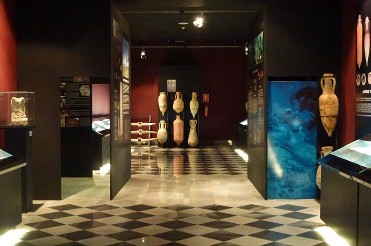
Arqueología: Se ofrece una muestra de los principales hallazgos arqueológicos del municipio, tanto terrestres (La Raya), como submarinos, (Punta de Algas, San Ferreol, La Barra y El Mojón), así como una selección de fósiles y material de culturas prehistóricas del sureste. Junto al material descrito, existen una serie de paneles explicativos y maquetas, didácticos y amenos, que informan al visitante de los datos más significativos de las piezas expuestas. Etnografía: Este apartado está dedicado por un lado a la burguesía que se asentó en San Pedro del Pinatar a finales del siglo XIX, construyendo sus residencias de verano y participando en la vida social del momento, y por otro lado a las gentes de a pié, que con su trabajo y esfuerzo consiguieron levantar el municipio y llevarlo a los niveles actuales. Están representados algunos de los principales oficios que fueron el motor de la economía del momento: la pesca, la agricultura, las salazones y la salinera. Colección de juguetes antiguos: Se pueden contemplar más de 300 juguetes antiguos, cedidos o donados por colaboradores. Se hace un recorrido por la historia del juguete, desde los más antiguos tirachinas, canicas y trompas, hasta los primeros video juegos de ordenador. Colección de material cinematográfico antiguo: Proyectores antiguos, cámaras de fotos y material propio de las cabinas de proyección.
ÁGUILAS
C/ Conde de Aranda, 5
30880 - ÁGUILAS
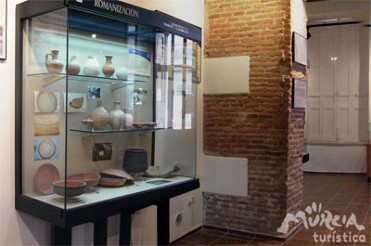
Inside we can review the history of the town, from the Neolithic to the present day. it emphasizes the collection of Roman archaeology.
CARTAGENA
Pza. del Ayuntamiento, 9
30202 - CARTAGENA
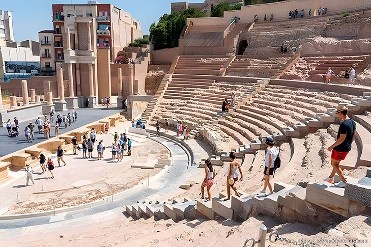
The Museum respond to the need for a museum space in which to bring together all the pieces found during the successive excavations of the Roman Theater. The Museum, designed by architect Rafael Moneo, incorporates the Riquelme Palace and the Church of Santa María la Vieja in the complex, making the Theater the last and most notable piece presented in the Museum. Through these exhibition spaces, visitors will be guided from the lower parts of the city to the interior of the Roman theater. Enjoy the Virtual Tour. Click here
CEHEGÍN
Plaza del Castillo, s/n
30430 - CEHEGÍN
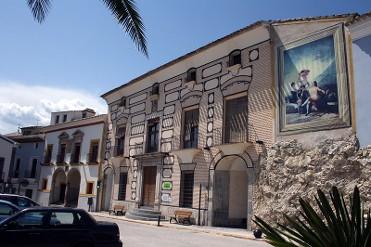
It currently provides 12 exhibition rooms, as well as a library and an information room. The museum consists of three buildings, two of which are historic ones. One is the old Town Hall, the Palacio de los Fajardo, inaugurated in 1676 and whose main façade and outbuildings were built in 1745 on the annexes of the 12th century castle. The other building is located in Calle Mayor and corresponds to a smaller noble house from the 18th century. Between them, the three buildings have a total floor area of more than 2,800 square metres.
LORCA


Castillo de Lorca
30800 - LORCA
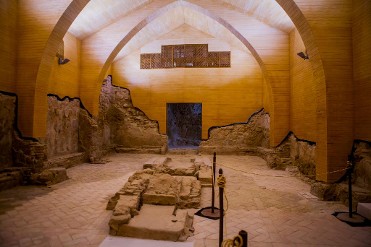
Archaeological Park of the Castle and Synagogue In medieval Lorca the castle, and under the protection of the Alfonsina Tower, housed the city's Jewish quarter. Excavations in this quarter have revealed what the Jewish houses of the time were like, with a rectangular floor plan, compartmentalised into rooms, and in which spaces can be identified for living rooms, kitchens, storerooms and other rooms that house different uses, as well as benches attached to the wall, jars, cupboards, raised bedrooms, etc. In the Jewish quarter of Lorca, the Hebrews established their synagogue, an exceptional example of Jewish religious art in Spain. The temple was built underground because according to the laws of the time it could not exceed the height of the churches and this, together with the fact that it was never converted into a Christian temple, has allowed the synagogue to be preserved in an exceptional state. The Archaeological Park of the Castle of Lorca has been conceived as a space to enjoy the finds excavated in the Jewish quarter through a walk through the streets of the archaeological remains of the Jewish quarter, discovering what their houses, their offices and traditions were like, and the feeling of Jewish spirituality with a visit to their exceptional synagogue.
CARTAGENA
C/ Ramón y Cajal, 45
30205 - CARTAGENA
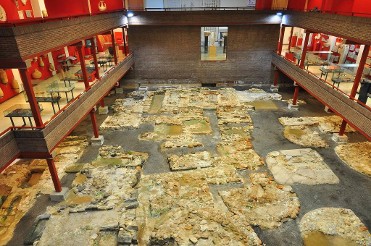
The museum houses one of the most complete archaeological exhibits in the region. The site was built in 1982 around a late-Roman necropolis, which is probably the structure that gives more character to the museum. The route of the permanent exhibition starts in Prehistory and passing through the Iberian Culture finds in the period of Romanization the bulk of the exhibition where the collection of funeral epigraphy, one of the best in Spain, deserves a special mention. Equally important are the Roman mining sections, with a varied typology of products, tools, and utensils of that period , or that of ceramic productions, mainly crockery , which testify to the intense commercial traffic that the port maintained from the second century B. C. onwards Enjoy a Virtual Visit to the Municipal Archaeological Museum of Cartagena. Click here
CEHEGÍN
Cabecico Roenas, s/n
30430 - CEHEGÍN
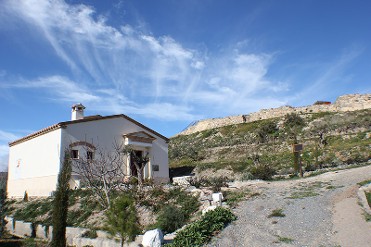
Nowadays Begastri is an archaeological site in the hill Cabecico Roenas 3 km away from the city center of Cehegín where Iberians, Romans and Visigoths settled. The site of Begastri is one of the most important places of the late-Roman period in Spain. The many inscriptions, definitely confirmed the location of Begastri at the Cabezo Muela, or as it was more commonly known, Cabezo de Roenas, from which the word ruinas (ruins) is derived. Another important find was two huge doors of the city, the southern and eastern, around which was found a high quantity of architectural elements including remnants of sculptures and sarcophagus which are currently exhibited at the Museum in Cehegín. There are two important features that should be mentioned. Firstly, the Cross of Cehegín, which is a splendid, monogrammed cross made of bronze. It is decorated with the Greek letters Alpha, Omega and Rho which represent God. The second is a sarcophagus, with the image of Adam, found recently on the eastern side of Begastri. This unique piece, made of Italian white marble in the workshops of Rome, was brought to Cehegín by a rich Christian in the first half of the 4th century AD.
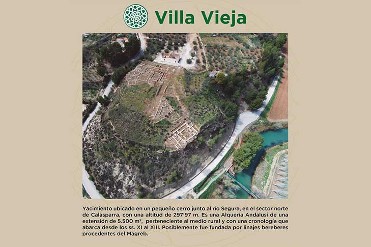
CALASPARRA
Paraje de Villa Vieja
CALASPARRA
Remains of walls and fortifications. Spanish-Muslim unpopulated area, made up by alleys separating modest dwellings with square floors. At present, it is possible to visit the village and the Interpretation Centre.
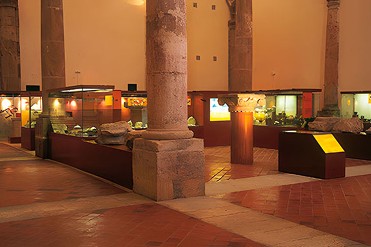
CARAVACA DE LA CRUZ
Cuesta del Castillo, s/n. Iglesia de la Soledad
30400 - CARAVACA DE LA CRUZ
The church was built in the location of the primitive church of El Salvador. It was built in the second third of the 17th century under the name of La Soledad, thanks to the patronage of Mr Pedro Muñoz Otálora, the senior lieutenant of the town. The church was designed and built by the master Juan Garzón Soriano, with the intervention of the local carpenter Sebastian de la Iglesia. Since the late 17th century, it became part of the primogeniture of the Muñoz family. During the 18th and 19th century it went to the Counts of Clavijo and Marquises of El Salar due to marriage covenants and inheritance divisions. The Archaeological Museum is a first-rate equipment located in the historic city centre. It collects pieces of great value, as a result of the many findings in the excavations at several archaeological sites, especially those carried out in the Iberian-Roman complex of La Encarnación. In this museum we can find pottery, weapons, coins, architectural elements, etc. Telephones: Bookings: 968 705 620 Museum: 968 700 512
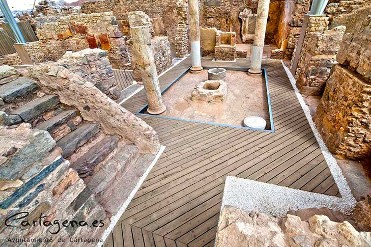
CARTAGENA
Calle Adarve
CARTAGENA
The Roman Forum Museum stands as the entrance to one of the largest urban archaeological parks in Spain. Throughout its various halls, where a careful selection of pieces is exhibited, you will be able to learn about the long history of Cerro del Molinete from today back to the old Carthago Nova. The visit concludes with a tour of important remains of the glorious Roman era that invite you to stroll through them: the Curia or local senate with its richly decorated marble pavement; the Colonial Forum, the city’s neuralgic centre, the distribution of which symbolised at various levels the hierarchy between the divine and the human; the Sanctuary of Isis where the mystery cults of the Egyptian gods were celebrated; the old roads with cart tracks; the port’s thermal baths and in particular its magnificent entrance portico with its original flooring; and to finish the Atrium Building, with its high walls and pictorial decorations that transport you to the great banquets of the Roman Empire.
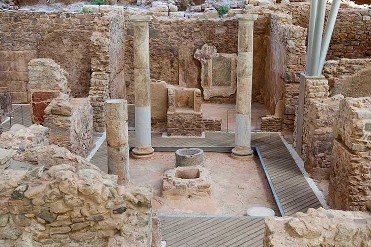
CARTAGENA
C/ Adarve
CARTAGENA
The Roman Forum Museum stands as the entrance to one of the largest urban archaeological parks in Spain. Throughout its various halls, where a careful selection of pieces is exhibited, you will be able to learn about the long history of Cerro del Molinete from today back to the old Carthago Nova. The visit concludes with a tour of important remains of the glorious Roman era that invite you to stroll through them: the Curia or local senate with its richly decorated marble pavement; the Colonial Forum, the city’s neuralgic centre, the distribution of which symbolised at various levels the hierarchy between the divine and the human; the Sanctuary of Isis where the mystery cults of the Egyptian gods were celebrated; the old roads with cart tracks; the port’s thermal baths and in particular its magnificent entrance portico with its original flooring; and to finish the Atrium Building, with its high walls and pictorial decorations that transport you to the great banquets of the Roman Empire.
PUERTO DE MAZARRÓN (MAZARRÓN)
Calle Antonio Cuello León, 15
30860 - PUERTO DE MAZARRÓN (MAZARRÓN)
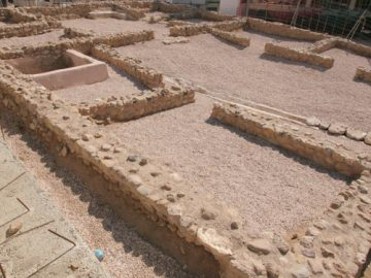
In 1990, at the back of the ancient port located in an area called La Era, a necropolis and some Roman single-family homes were excavated. The most complex houses had a hall, bedrooms, patio, kitchen and a cistern. They resembled classic Roman house models, with a central room around which the other rooms were centered. One of these houses was preserved by request of the Directorate-General of Culture, due to its scientific, historical and educational interest, and to the fact that it had been well preserved. The house mentioned has a surface of 300 m2 and is one floor, with the following structure: a large central room with a bench and plastered walls, interpreted as the triclinium, or hall. On each side of this room there are two symmetrical rooms which are entered through the main room. In the north side there is a large room with water channels or gutters wich have been identified as a possible atrium or vestibule. Around this patio the pattern of two symmetrical parallel rooms repeats, one serving as water storage with a 2 m deep pool, located next to what can be assumed the kitchen of this Roman house. The house of Calle Era formed part of the urban area of Port of Mazarrón in Roman times and was set up around another group of homes and a network of streets and small alleyways. These houses are the only clearly residential nucleus of the late Roman period studied to date. They were built at the same time that the salting factory was fully functioning and at its peak (the 4th-5th centuries A.D.). Rests of materials found in the homes, such as the high number of coins and the richness of the domestic goods indicate that the site belonged to a sector with significant acquisition capabilities. We assume that we are looking at a population nucleus dedicated to administrative or commercial activity connected to the salted fish industry, where people conserved Roman traditions, way of living and urban layout, although with a local market as indicated by materials and the structural system.
SAN PEDRO DEL PINATAR
Avda. del Puerto (junto gasolinera de La Raya de Castilla)
30740 - SAN PEDRO DEL PINATAR
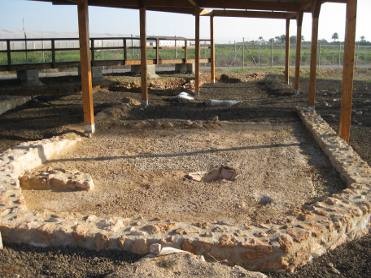
Durante las diferentes campañas de excavación realizadas desde 2002 hasta la actualidad, se ha delimitado el perímetro de la villa y se han sacado a la luz numerosas estructuras murarias, además de abundante material cerámico, estucos pintados, etc. La parte del yacimiento que podemos observar, corresponde ,posiblemente, a un borde exterior de la villa. Las dimensiones de estas construcciones podían llegar a los 10.000 m2, entre las dependencias de señores, sirvientes, zonas de trabajo, torres defensivas, cuadras, etc. El yacimiento se encuentra todavía en fase de excavación y estudio, por lo que las dependencias que podemos observar aún no están catalogadas. Esta villa pudo ser utilizada para varios usos durante su funcionamiento, destaca el de villa de recreo y el de villa comercial, dada su proximidad al fondeadero del Mar Mediterráneo.
ALHAMA DE MURCIA
Cerrado temporalmente
Cerro del Castillo
30840 - ALHAMA DE MURCIA
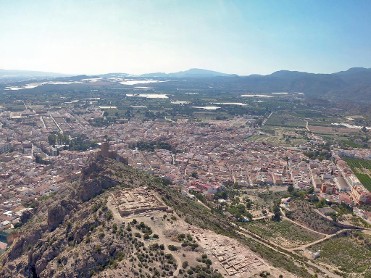
In the Guadalentín valley stands an impressive medieval complex on the Cerro del Castillo de Alhama de Murcia, the fortified settlement of Las Paleras, built ex novo on the highest part of the hill. An excellent natural watchtower, it was a strategic enclave in the 9th century, during the Emirate, between the large cities of Murcia and Lorca, in an area rich in natural resources. The exceptional nature of this archaeological site can be explained by the fact that it is a precise context, materially Islamised, framed between the 8th and 10th centuries, with oriental influences, with no previous occupation and no subsequent reconstructions or occupations. Large defensive walls and towers were built to protect the settlement during a period of great political instability and continuous rebellion and conflict. Citadel, streets, dwellings and silos were part of daily life in this 9th-century settlement of the Tudmir Korah. Its urban layout is a window into the past; a unique and singular journey through an authentic Andalusí settlement. The recent excavations and works makes it possible to visit it a thousand years later, through the guided tours organised by the tourist office.
CARTAGENA
Paseo de Alfonso XII, frente Dársena Botes. Antiguo CIM
30205 - CARTAGENA
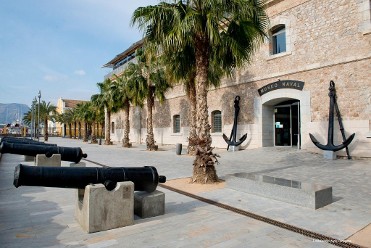
The Naval Museum of Cartagena is located on the ground floor of the building built in the 18th century as the Prisoners and Slaves Barracks, which became the Marine Instruction Barracks after the Civil War. In 2005, thanks to the signing of an agreement between the Ministry of Defense and the Autonomous Community, it was remodeled to host one of the campus of the Polytechnic University of Cartagena, reserving part of its space for the Naval Museum. In 2013, the museum was expanded with the inauguration of the Isaac Peral Hall in the former Workshop of Calderería del Arsenal. After the rehabilitation of the ship, the Peral Submarine moved from the seafront to undertake its restoration and its adequate exposure to the public, becoming the main piece of the museum. In the same space, the Legacy of Isaac Peral is displayed, which contextualizes the important contribution of the Cartagena sailor to scientific and military history. The collection offers a tour of the history of the Navy in the city of Cartagena and is divided into the following thematic areas: - Naval building - Navigation - Naval artillery and portable weapons - Naval Health - Flags and uniforms - Naval painting - Marine infantry - Diving - Underwater weapons - Isaac Peral Room Enjoy the Virtual Visit to the Naval Museum of Cartagena. Click here
JUMILLA
Pza. de Arriba, s/n. Antiguo Palacio del Concejo.
30520 - JUMILLA
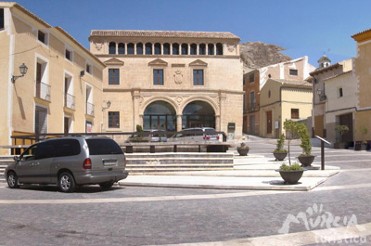
El museo arqueológico está albergado en el Palacio del Concejo, realizado a mediados del siglo XVI, único ejemplo de arquitectura civil dentro del Renacimiento en la Región de Murcia. Tiene tres cuerpos horizontales separados por cornisas. El primero tiene dos amplios arcos que descansan sobre tres gruesas columnas de orden toscano, que daban cobijo a la antigua lonja. El segundo cuerpo, consta de tres ventanas con frontispicios sobre ellas, y el tercero, el más llamativo, es una arcada de columnas salomónicas entrelazadas. Tras la remodelación en 1997, fue inaugurado como Museo. La colección arqueológica cuenta con utensilios encontrados en los ricos yacimientos de la comarca. Además de arte Paleolítico, Neolítico y del Bronce, alberga la colección procedente del poblado de Coimbra y del Barranco Ancho, donde aparecieron 150 sepulturas íberas. Entre cerámica, tabas dadas para el juego, enseres domésticos, lanza y espadas, destaca el Cipo funerario de los Jinetes, de forma cúbica, en el que se relata la vida del personaje en cuatro relieves bien conservados. De época romana, podemos ver un mosaico ramano de la Villa de los Cipreses. Una colección de vajillas de la cerámica típica romana, conocida como terra sigilita, terracotas de dioses domésticos y lucernas, algunas con motivos cristianos, completan la exposición de este periodo. De la época islámica se conservan cerámicas estampilladas (S.XIII) y con decoración al manganeso (S.XII). Las lozas cristianas cierran este recorrido histórico, destacándose las lujosas de reflejos metálicos (S.XV).
MURCIA
Av. Alfonso X "el Sabio", 7
30008 - MURCIA
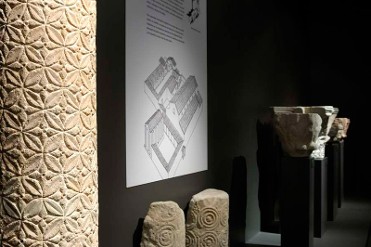
The Archaeological Museum is located in the House of Culture. At the beginning it was built as Provincial Palace of Archives, Libraries and Museums, thanks to the architects Luis Moya and José Luis León. It opened its doors in 1956. It is the best museum to know the most characteristic of regional archeology. TIME: XX Century STYLE: Historicist
CAMINO MOLINOS (TOTANA)
6 km al noroeste de la localidad murciana de Totana, en la zona de Viñas-Carivete
30850 - CAMINO MOLINOS (TOTANA)
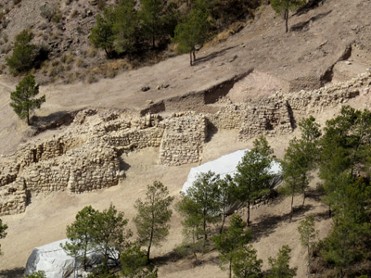
El yacimiento de La Bastida de Totana se encuentra a 6 km al noroeste de la localidad murciana de Totana, en la zona de Viñas-Carivete. Ocupa un cerro empinado en la confluencia entre la rambla de Lebor y el barranco Salado. La Bastida es el primer enclave argárico descubierto y, actualmente, uno de los más importantes de la prehistoria Europea, en concreto de la llamada Edad del Bronce. Este período reviste un especial interés para el conocimiento de nuestro pasado, ya que en él se produjeron acontecimientos cuyos efectos todavía influyen en nuestro presente, como el afianzamiento de la vida sedentaria, el desarrollo de la metalurgia y la generación de desigualdades políticas y económicas permanentes. Desde su descubrimiento y primeras excavaciones a cargo del ingeniero granadino D. Rogelio Inchaurrandieta en 1.869, el yacimiento ha sido objeto de diversas intervenciones arqueológicas. Los trabajos, que continúan hoy en día, muestran una auténtica ciudad de unos 40.000 m2 que, en su época de máximo esplendor, hace unos 3800 años, estuvo habitada por unas 1000 personas. En aquel entonces, era uno de los asentamientos más grandes de Europa y del Mediterráneo occidental. Se han hallado decenas de viviendas, escalonadas en terrazas artificiales a lo largo de las laderas del cerro. El propio enclave se sitúa en un lugar estratégico, oculto desde el valle del Guadalentín y con buenas condicones naturales para la defensa. Son de especial interés sus tumbas, ya que éstas se localizan bajo el suelo de las viviendas. Solían contener uno o, a veces, dos individuos en posición encogida, dentro de vasijas de cerámica o de cistas, esto es, cajas hechas con losas o paredes de piedra. Una parte de estas tumbas contenía también ofrendas, como cuencos y ollas de cerámica, armas, útiles y adornos de cobre o plata, y collares de cuentas de hueso, concha y piedra. Las diferencias entre estas ofrendas nos hablan de una comunidad dividida en clases sociales. Las excavaciones arqueológicas realizadas durante el año 2012 en el yacimiento arqueológico han sacado a la luz un imponente sistema de fortificación único en su época. El hallazgo reafirma, junto al resto de descubrimientos realizados en los últimos años, que la ciudad fue el asentamiento más desarrollado de Europa en términos políticos y militares durante la Edad del Bronce (hace 4.200 años, 2200 a.C.) sólo comparable con la civilización minoica de Creta. La fortificación constaba de una muralla de 2 a 3 metros de grosor, construida con grandes piedras trabadas con argamasa y reforzada por torres macizas tronco-piramidales distribuidas a escasa distancia entre sí y de unos 4 metros de lado. La altura original del complejo defensivo rondaría los 6 o 7 metros. Hasta ahora se han descubierto seis torres a lo largo de un tramo de 70 metros, aunque el perímetro de la fortificación habría alcanzado los 300 metros. La entrada al recinto se realizaba a través de un pasillo flanqueado por potentes muros, que quedaría cerrado con portones encajados entre gruesos postes de madera.
ÁGUILAS
C/ Canalejas (esquina Quintana)
30880 - ÁGUILAS
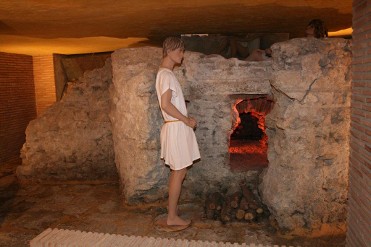
In the ground floor of the building located in C/ Rey Carlos III there are remains in situ of Roman baths dating back to the 1st century AD, specifically part of a caldarium (hot baths room).
LORCA
Plaza de Don Juan Moreno, s/n.
30800 - LORCA
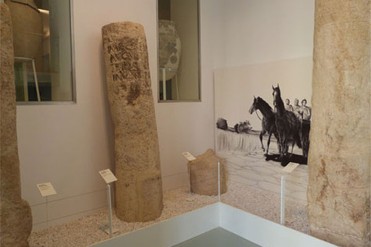
The visitor will find a completely renovated museum from the development of a new musealization, with which it has tried to enhance unity and clarity in the expository discourse, from the thread generated by the traces left by our ancestors in this territory for 30,000 years. There are different spaces where the selected pieces are shown having seismoresistant criteria that guarantee their safety and that of the visitors.
CARTAGENA
Pza. del Risueño, 14
CARTAGENA
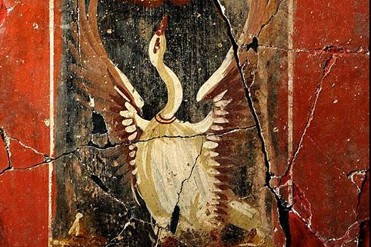
The Fortuna House will take you to the domestic environment of the Roman Cartagena during the first century. The different rooms that formed the house, the dining room where the family celebrated the banquets, the salon in which the lord of the house received his visitors or to the bedrooms and private part of the house. Their objects of personal adornment, chandeliers, dishes, among others, will help you understand the fashions and customs of the time. At the same time, you will be able to admire the beauty of its murals and mosaics with a variety of reasons such as the Swan – image of the house - , swastikas, flowers or pomegranates. All laden with a great mythological symbolism. Enjoy a Virtual Tour of Casa de la Fortuna. Click here