ABANILLA
Pza. de la Constitución, 1
30640 - ABANILLA
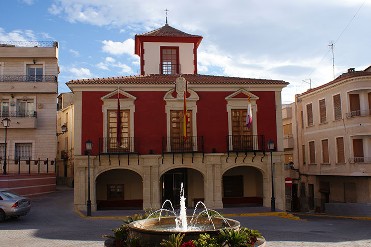
The Town Hall is a civil building of the 18th century, which was built between 1751 and 1762 during the reign of Ferdinand VI of Spain. This building preserves the windows, iron fittings and mouldings from that period. It worked as a royal prison and granary, whose access door has been recently discovered in the south after a renovation of the facade. Its interior is functional and mainly for administrative use. Its facade and surroundings are also relevant.
ÁGUILAS
Peña Tejada-Cerro de las Águilas
30880 - ÁGUILAS
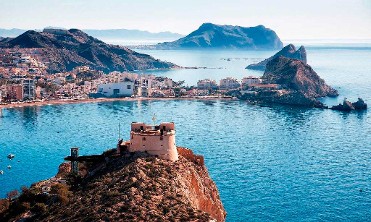
The Castle of San Juan de las Águilas perches on top of the headland of Punta Negra and a raised platform wich has attracted human settlers since prehistoric times. Archaeological investigations have revealed remains dating from the Chalcolithic, or Copper Age, including fragments of hand-crafted ceramics, flint tools and polished stone axes, one of wich is made from diorite and is now housed in the local Archaeological Museum. These materials belonged to groups of individuals who devotes themselves for a time to the collection of mollucs and other marine species along the coastline. In relation to the period of roman rule, excavations have uncovered numerous structural remains and materials: amphorae, common and luxury ceramics. Construction of the castle as we see it today dates back to 1756 during the reign of Fernando VI and was designed by military engineer Sebastián Feringán. It has been awarded Item of Cultural Interest status in the category of "Monument" and is inextricably intertwined with the history of Águilas: the foundation of the modern town coincided with the period when it was being built in the middle of the XVIII century. There are three main elements in the fortification: On the western side is the Fortress of San Juan, wuth a central courtyard, an artillery plattform, a first floor intended for accomodation and the kitchen and a ground floor used as a warehouse, gunpowder and prison. To the east is the gun battery of San pedro, where the guns and barbettes for defending the port were housed, and in between them a communication wich includes the forts of San José and San Felipe (whose role was to complete the defence of the stronghold.) Its restoration managed the defintely recovery od the castle, and now that it is fully visitable it is one of the most important examples of the town.
ALHAMA DE MURCIA
Cerrado temporalmente

C/ Sánchez Vidal, 5
30840 - ALHAMA DE MURCIA
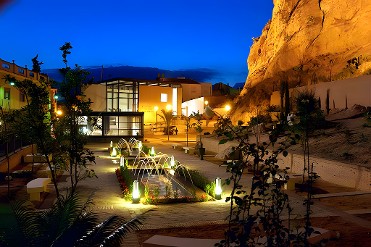
Temporarily closed for renovation work, efficiency improvements and museum digitisation, The Museo Arqueológico de Los Baños is an on-site museum, created to preserve and protect the archaeological remains of the Baths of Alhama de Murcia. Its restoration and development has meant an important contribution to the study of hydrotherapy and its architecture throughout different periods of its history. The thermal complex has restored its original areas through a series of renovation projects and adaptations, creating a modern building, a garden area with water at the forefront and the inside museological preservation of the remains, showing thematic sections about different cultures. Its architecture is an example of conservation of heritage, in the same complex, from Roman rooms, to their reuse in the Islamic and Christian periods, until the construction of the new Hotel Spa in the 19th century. In 1983 its archaeological remains were declared a Historical Artistic Monument of National Character and in May 2008 it was included in the Region of Murcia’s Museum Network. The Museum hosts the Archaeological Collection and Municipal Ethnographic of Alhama.

BULLAS
Paraje Los Cantos
30180 - BULLAS
The Roman Villa of Los Cantos is located in the municipality of Bullas, in the middle valley of the river Mula in the Northwest Region of Murcia. The complex follows the land settlement model that was developed during the Roman period. It is divided into multiple cores, amongst these are; the urban pars where you would find the domus, the seasonal residence for the owner of the farm, the thermal complex and the parsframentaria or industrial sector dedicated to the manufacture and storage of agricultural and livestock production. The villa had to have housing for slaves otherwise known as pars rustica, and was likely to have a garden or hortus area. The chronological period of the reservoir extends from the 2nd century B.C. until the 5th century A.D, which caused a superimposition and the reuse of different structures and exploitation patterns. Also worth mentioning is the architectural style, which shows a better defined manufacturing unit and is currently being valued and dates back to the 2nd century A.D. For more information Folleto Villa Romana Los Cantos
CALASPARRA

Santurario de Nuestra Señora de la Esperanza
30420 - CALASPARRA
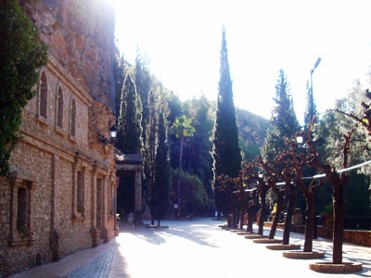
The sanctuary is situated in a cave carved into the rock 6 km away from the town of Calasparra. The first information about it dates from the17th century. Two statues of Our Lady of Hope known as La Pequeñica (the Tiny One) and La Grande (the Big One) are kept in this sanctuary. According to the legend, the small statue was found by a shepherd who sheltered his cattle in this cave sculpted by the river Segura. The local people of the village tried to move the statue to the town of Calasparra but, due to its weight, they understood that the Virgin prefered to be venerated in this cave. The reason why and the date when the bigger statue of La Virgen de la Esperanza appeared remain unknown. In the year 1786, they were already both venerated.
CARAVACA DE LA CRUZ

C/ Cuesta del Castillo, s/n
30400 - CARAVACA DE LA CRUZ
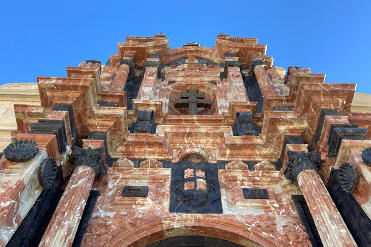
The monument consists of two clearly differentiated parts: the walls and the sanctuary. Despite its Islamic origins, the monument has undergone many changes. Nowadays, fourteen different shaped-and-sized fortified towers are spread along the wall. The fortress belonged first to the Order of the Temple, and later to the Order of Santiago ¿a Spanish Christian military order. Moreover, the castle was used for military purposes during the Spanish Succession War and the Peninsular War. The Santuario de la Stma. y Vera Cruz (the Holy True Cross Sanctuary) was built in the heart of the old fortress in the 17th century. Then, in the 18th century, its magnificent baroque façade was annexed to the sanctuary. The monument as a whole, whose guidelines resemble those of the Monasterio del Escorial (El Escorial Monastery, Madrid) was declared a national Artistic-Historical Monument in 1944. No doubt the presence of the Vera Cruz (the Holy True Cross) has contributed to the sanctuary preservation. The church has a Latin-Cross plan, a continuous gallery over the lateral naves, and also a dome over the transept. Recently, the Museo de la Santa Vera Cruz (the Holy True Cross Museum) has been reopened in the sanctuary rooms. Telephone: 968 707 743 968 708 540
CARAVACA DE LA CRUZ
Castillo, Santuario de la Vera Cruz
30400 - CARAVACA DE LA CRUZ
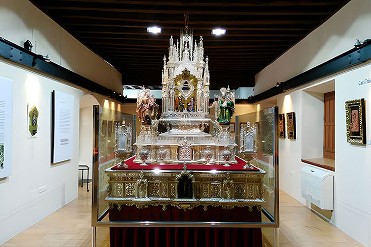
The building consists of two perpendicular naves preceded by a double gallery with semicircular lowered arches. It was designed during the first half of the 17th century. The museum has also a collection of metal works and paintings. Inside the art gallery stand out 6 oil paintings on panel painting from the 16th century. These are original works of Hernando de los Llanos, a painter who was a disciple of Leonardo da Vinci. Another work worthy of mentioning is the oil on canvas Curación de Tobias (the healing of Tobias), made by Rafael Tegeo from Caravaca, who was a personal painter of Queen Isabel II and one of the best Spanish neoclassical portraitist from the 19th century. In the metalwork section we can find the artwork Custiodia-Ostensorio de la Cruz (The Custody-Hostensory of the Cross) from the beginning of the 16th century; the artwork Portacruz de los Baños, a present from Luis Fajardo, the second Marquis of Velez; and the silver gilt box, donated towards the end of the 14th century by the master of the Order of Santiago, Lorenzo Suárez de Figueroa. Standing as an important piece in the museum, La Casulla de Chirinos, a Muslim tiraz adapted to the shape of liturgical ornament, is believed to have been carried by priest Chirinos at the time of the miraculous apparition of the Cross.
CARTAGENA
Paseo Alfonso XII, 22
30201 - CARTAGENA
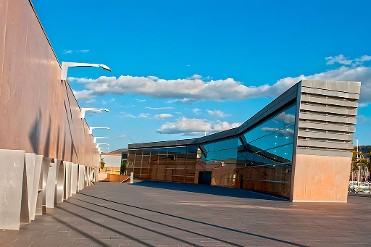
ARQUA Museo Nacional de Arqueología Subacuática is the institution in charge of studying, valuing, investigating, preserving, disseminating and protecting the Spanish underwater cultural heritage. Furthermore, the ARQUA takes charge of the Odyssey’s treasure. The Nuestra Señora de las Mercedes frigate collection, which consists of more than 570,000 gold and silver coins from the late 18th century and the beginning of the 19th century. ‘PHENICIANS, Merchants of the Sea’ - Temporary Exhibition from 19 November 2025 to 17 May 2026 The site, discovered in the 1950s on the coast of San Javier (Murcia), has proven to be of extraordinary importance for studies of Phoenician society. Currently, of the six Phoenician shipwrecks excavated and studied in depth in the Mediterranean, three have been found on the Spanish coast, specifically in the Region of Murcia: two located in the bay of Mazarrón and the third in the municipality of San Javier, to which this exhibition is dedicated. Thanks to the excavation of this wreck, it has been possible to confirm several key aspects, such as the existence of Phoenician trade routes along the regional coastline, the exploitation of the Iberian Peninsula's natural resources, the cultural influence exerted on local communities, and the consolidation of a complex exchange system that connected the entire Mediterranean. The significance of these findings has transcended national borders, placing Bajo de la Campana at the centre of international conferences, symposiums and studies for several decades.
CEHEGÍN
Casco Histórico de Cehegín
CEHEGÍN
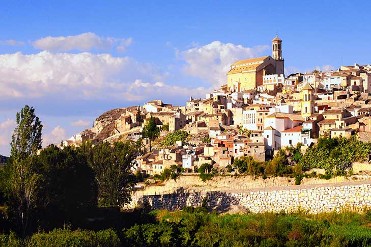
Declared a Historic-Artistic Site in 1982, there are many examples of popular architecture from the 12th to 19th centuries, including the Palacio Villar de Felices, the Palacio de Jaspe, and the Casa del Conde de Campillos with heraldic examples of great interest to researchers. Religious architecture includes the Church of Santa María Magdalena, the Church of La Soledad, the Church of La Concepción and the Hospital de la Real Piedad, and in the Ensanche area, the Convent of San Esteban. There are also abundant prehistoric remains such as the cave paintings of Peña Rubia and Begastri, a late Roman and Visigoth city which was the Episcopal see until the 8th century AD. There is also a Municipal Archaeological Museum and a private Ethnological Museum, belonging to the Duke of Ahumada, and its Historical Archive.

CIEZA
c/ cadenas
30530 - CIEZA
At Cadenas street, we find the Marin-Barnuevo family house wich was rebuilt in the first half of the XVIII century an then, rehabilited at the end of XX century. It still retains its most important elements such as its iron works and the main frontage. Nowadays, this building is used as a venue for music and dance education, hence its name "House of Arts".
CIEZA
C/ San Sebastián, 17
30530 - CIEZA
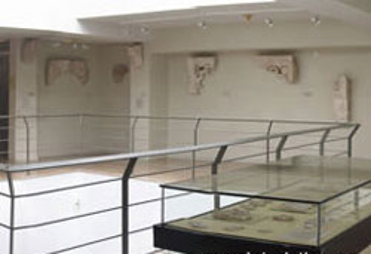
Opened in May 1999, it houses a magnificent sample of the archaeological patrimony of Cieza. It consists of four levels with a splendid sample of the archeological and ethnographic legacy of our territory, wich invites the visitor to explore the history otf the village from Palaeolithic to the early twentieth century. One of the most valuable treasures of this museum is the life-size reproduction of houses 6 and 10 of the arabic town of Siyâsa (located on the so called "Hill of the Castle"). Thes life-size Arabian houses contain arches and proticos from the almohad caliphate and the beginning of the pre-nazarie era, plasterwork and stuccoes that decorate floors and ceilings as well as a central patio that leads to all the rooms of the house. They really transport the visitors to another time.
CIEZA
Plaza de España
30530 - CIEZA
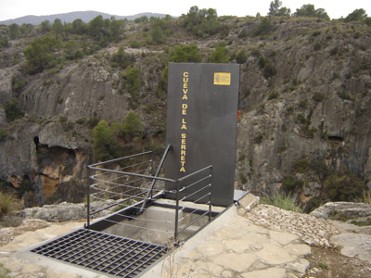
Se encuentra en el margen izquierdo del río Segura, en el borde del cañón cárstico de Los Almádenes. Otra apertura, de grandes dimensiones, se abre hacia el interior del mencionado desfiladero permitiendo una gran iluminación natural de las pinturas rupestres así como la zona más habitable de la cavidad. En total aparecen en la cavidad 50 figuras, repartidas en dos paneles y pertenecientes en su totalidad al Arte Rupestre Esquemático, que incluye en este caso algunas figuras del estilo seminaturalista.
CIEZA
Balcón del Muro
30530 - CIEZA
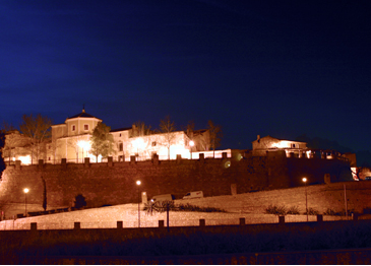
The Wall Balcony is witness to important historical events such as the bloody take-over of the town by Abu-I-Hassan and his troops from Granada wich gave the town its motto found on the crest: "For crossing the birdge the gave us death". The town was sacked and its inhabitants made prisoners. This Balcomy was completed in 1898.
JUMILLA
Castillo
30520 - JUMILLA
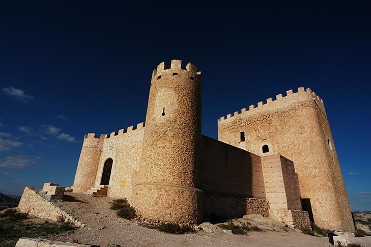
In 1461, the Marquis of Villena built the fortress, as we know it today, in Gothic style, with three floors, a cellar and a terrace, where he put his coat of arms. The Torre del Homenaje (Keep) is a rounded tower in order to cushion the impact of the cannon balls. The cellar or basement was used as dungeon and as a place to reserve food and water. The first floor or Sala del Bastimento (Supply Room) is the place where the weapons of the troops used to be kept and it also was the defence of the Castle. Nowadays it does not exist because it was destroyed on a fire during the Peninsular War. The second floor or Sala del Alcaide (Governor Room) is the most important room, with a main hall and the residence of the jailer. The door of entry, with a portcullis, is placed in this floor. The third floor or planta de la tropa (floor of the troops), is the place where the oven and the forth floor or terrace used to be. There are two wells of the Arabic time in the Patio de Armas (Parade Ground). The original access to the Castle is el Camino del subidor (The Road of the Raiser). These days, the Castle of Jumilla has became an exhibition space where tourists can learn about the different stages and elements of its construction.
LORCA


Castillo
30800 - LORCA
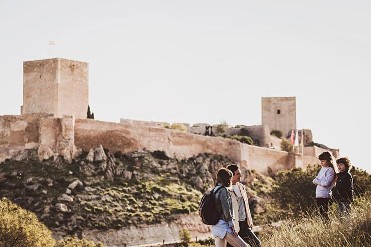
The Castle of Lorca is an ancient medieval fortress from the 11th to the 13th centuries. It was used over time to defend the border between the kingdoms of Murcia and Granada. It was in use until well into the 16th century. During the War of Independence (1808-1814) it was again used as a place of refuge and defence. Today it hosts a recreation and exhibition of the Middle Ages. Here you can visit the towers, cisterns and the archaeological remains of the Synagogue from the 15th century. Translated with www.DeepL.com/Translator
LAS LOMAS DEL RAME (LOS ALCÁZARES)
Las Lomas del Rame
30710 - LAS LOMAS DEL RAME (LOS ALCÁZARES)
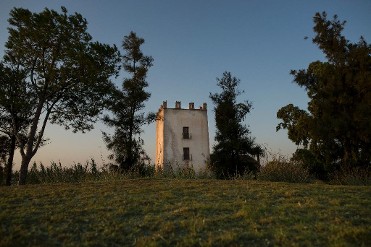
Fortaleza de origen árabe que formó parte del sistema vigía de las costa del Mar Menor y que durante el repoblamiento castellano fue remodelada para prevenir las incursiones piratas por el litoral mediterráneo.
PUERTO DE MAZARRÓN (MAZARRÓN)
C/ La Torre esq. San Ginés
30860 - PUERTO DE MAZARRÓN (MAZARRÓN)
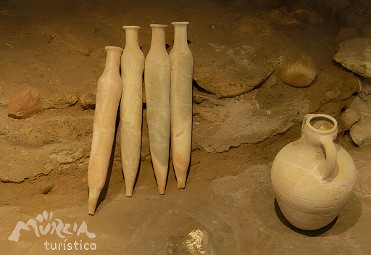
During Late Antiquity, the Port of Mazarrón was an important economic center on the Murcian coast linked to fishing activity. Next to the port facilities was located (during the 4th-5th centuries AD) a a large salting factory that occupied a large area on the right bank of the bay. The current museum preserves part of the structures of this important industrial complex dating from Roman times and used to manufacture salting fish and sauces. fish. The factory has been declared an Asset of Cultural Interest with an Archaeological Zone Category, through Decree No. 33/1995 of May 12 (BORM No. 141 of 06/20/95), both by the entity of the Roman complex, as well as for its extension, as well as for its contribution to the knowledge of the economic bases of the area, during the Roman imperial era. This Salting Factory is an example of the importance that the industries of the fish they had in the Roman period, when the products made in this type of company were essential in all the cuisine of the Empire. The characteristic elements common to all the factories were the salting pools or tanks, in which the fish was macerated with salt and different products were made, such as the so-called Garum, the most famous of fish sauces. and that reached very high prices in the Roman market. In the museum, in addition to the exhibition of the archaeological remains in situ of the Salting Factory, there is also an exhibition of the rich archaeological heritage that it has Mazarrón and the Port of Mazarrón.
MOLINA DE SEGURA
C/ Ibn Arabí s/n
30500 - MOLINA DE SEGURA
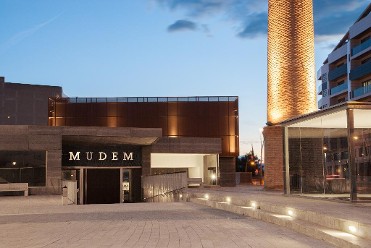
El MUDEM es un espacio cultural museístico para proteger y difundir los restos rescatados en 2004 en la muralla de Molina de Segura, el hisn Mulina andalusí. Un espacio con un enfoque lúdico e interactivo a la par que didáctico y reflexivo, que brinda la posibilidad de conocer mejor la historia de Molina de Segura en el contexto del antiguo Reino de Murcia. Lugar accesible para discapacitados. Teléfonos: 968 38 85 62 968 38 85 00 Ext. 2510.
MURCIA
Plaza del Cardenal Belluga
30001 - MURCIA
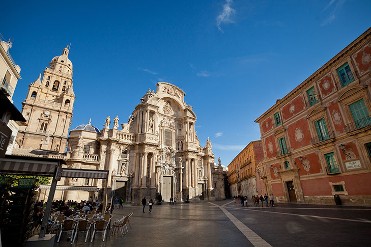
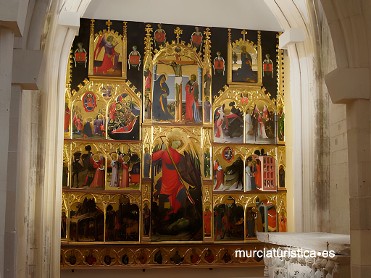
The most important temple in the Region is a magnificent merge of styles, a catalogue of stone which summarizes more than six centuries of art and history. Its construccion began in 1394 over the remains of an old Arabic mosque and in 1462 its vaults were finished. The oldest entrance is La Puerta de los Apóstoles (the door of the Apostles). Its only storefront is flanked by pointed archivolts with statues of the apostles on it. La Puerta de las Cadenas( the door of the Chains) dates from 1513 and has original pilasters and archivolts. From the 15th century dates the Capilla de Los Vélez covered by a ten-pointed star vault and profusely decorated. Another famous chapel is that of Junterón, whose oval ground plan is covered by an extremely original vault. Its baroque main façade (Imafronte), Jaime Bort¿s work, is an exaltation of levantino art (the 18th century eastern Spain art). It is divided as an altarpiece into two parts and three vertical sections. The tower, divided into five parts, is 92 meters high. Its construction started in 1511 and the fifth body hosts twenty-five church bells
MURCIA
Pza de Santa Eulalia 10-A
30003 - MURCIA
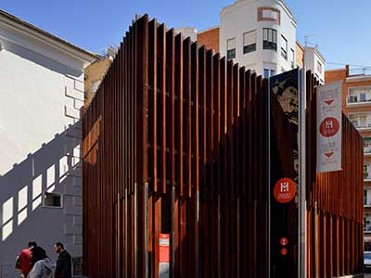
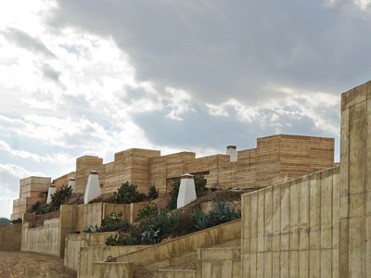
Visitors Centre of The Wall of Murcia.
MURCIA
Plaza Cardenal Belluga
30001 - MURCIA
Museum of the Cathedral.
PUERTO LUMBRERAS
Cerrado temporalmente
Cerro del Castillo, junto a la rambla del mismo nombre
30890 - PUERTO LUMBRERAS
Medieval Islamic castle built between the twelfth and thirteenth centuries, whose strategic location at the confluence of the Rambla de Nogalte and the Guadalentín Valley, allowed to exercise control over these natural communication routes that linked the Levant with Andalusia. In the surroundings of the castle there is a group of Cave Houses, which have been adapted as tourist spaces. These caves can be visited through a tourist-cultural itinerary along which visitors can learn about the history of the Islamic fortress, along with the caves used as homes for centuries, the importance of water or crafts for the local economy . The route offers pedestrian paths around the Nogalte Castle, as well as several stops in seven thematic spaces that offer the only cave houses that can be visited in the Region of Murcia. The thematic spaces are as follows: Craftsman's Workshop House The four caves that make up this space host the musealization of trades related to the activity of the different entities that make up the Association of Artisans of Puerto Lumbreras, the exhibition of handmade products and the sale to the visiting public. Cave "El Cerro de Nogalte: we recover our history" In this Cave House, the heritage values ¿¿of Cerro del Castillo de Nogalte are presented to the public, through a system of interpretive panels. Cave "Sheltered from Cerro de Nogalte: life and traditions in cave houses". Two Cave Houses that are dedicated to communicating the uniqueness and evolution of the human use of the caves in the southeast peninsular and in Puerto Lumbreras from prehistory to recent times, highlighting aspects such as the evolution of the use of the caves, the troglodyte habitat on the Hill de Nogalte or the socioeconomic and population aspects of these Cave Houses. Cave "The Culture of Water" The importance of water in Puerto Lumbreras is presented, establishing a route in a sense of circulation to present the routes of water from its collection, storage and distribution, to the uses in the different traditional and current activities. Cave "The medieval Nogalte Castle: Islamic enclave" This cave is intended to present the thematic contents of Nogalte Castle, as well as the Guadalentín corridor at border time as well as archaeological research in Nogalte Castle. Audiovisual Cave This space is intended to host a wide cultural program throughout the year with capacity for small groups, paying special attention to the production of local creators. Didactic Cave This cave is intended to support the development of educational and training activities aimed at groups organized through the programming of specific workshops related to the cultural visit to Cerro de Nogalte. Cave School It announces what school and teaching was like in the mid-twentieth century in Puerto Lumbreras, as it was the day to day school, to which children were engaged in their free time. It shows the general characteristics of the school, furniture and teaching materials of the time Enviar comentarios Historial Guardadas Comunidad