ALHAMA DE MURCIA
Cerrado temporalmente

C/ Sánchez Vidal, 5
30840 - ALHAMA DE MURCIA
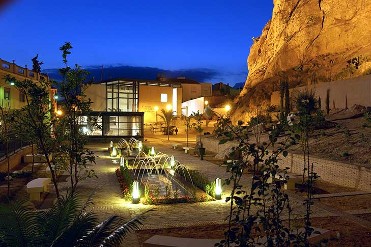
Temporarily closed for renovation work, efficiency improvements and museum digitisation, The Museo Arqueológico de Los Baños is an on-site museum, created to preserve and protect the archaeological remains of the Baths of Alhama de Murcia. Its restoration and development has meant an important contribution to the study of hydrotherapy and its architecture throughout different periods of its history. The thermal complex has restored its original areas through a series of renovation projects and adaptations, creating a modern building, a garden area with water at the forefront and the inside museological preservation of the remains, showing thematic sections about different cultures. Its architecture is an example of conservation of heritage, in the same complex, from Roman rooms, to their reuse in the Islamic and Christian periods, until the construction of the new Hotel Spa in the 19th century. In 1983 its archaeological remains were declared a Historical Artistic Monument of National Character and in May 2008 it was included in the Region of Murcia’s Museum Network. The Museum hosts the Archaeological Collection and Municipal Ethnographic of Alhama.
CARAVACA DE LA CRUZ
Castillo, Santuario de la Vera Cruz
30400 - CARAVACA DE LA CRUZ
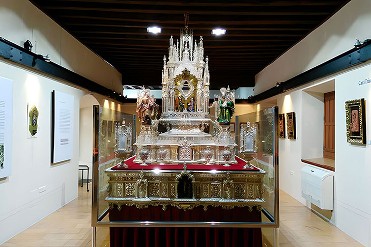
The building consists of two perpendicular naves preceded by a double gallery with semicircular lowered arches. It was designed during the first half of the 17th century. The museum has also a collection of metal works and paintings. Inside the art gallery stand out 6 oil paintings on panel painting from the 16th century. These are original works of Hernando de los Llanos, a painter who was a disciple of Leonardo da Vinci. Another work worthy of mentioning is the oil on canvas Curación de Tobias (the healing of Tobias), made by Rafael Tegeo from Caravaca, who was a personal painter of Queen Isabel II and one of the best Spanish neoclassical portraitist from the 19th century. In the metalwork section we can find the artwork Custiodia-Ostensorio de la Cruz (The Custody-Hostensory of the Cross) from the beginning of the 16th century; the artwork Portacruz de los Baños, a present from Luis Fajardo, the second Marquis of Velez; and the silver gilt box, donated towards the end of the 14th century by the master of the Order of Santiago, Lorenzo Suárez de Figueroa. Standing as an important piece in the museum, La Casulla de Chirinos, a Muslim tiraz adapted to the shape of liturgical ornament, is believed to have been carried by priest Chirinos at the time of the miraculous apparition of the Cross.
CARTAGENA

Paseo Alfonso XII, 22
30201 - CARTAGENA
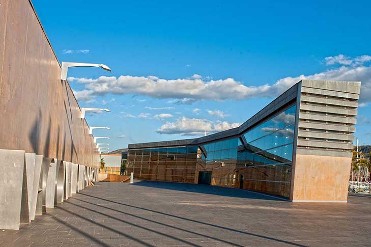
ARQUA Museo Nacional de Arqueología Subacuática is the institution in charge of studying, valuing, investigating, preserving, disseminating and protecting the Spanish underwater cultural heritage. Furthermore, the ARQUA takes charge of the Odyssey’s treasure. The Nuestra Señora de las Mercedes frigate collection, which consists of more than 570,000 gold and silver coins from the late 18th century and the beginning of the 19th century. ‘PHENICIANS, Merchants of the Sea’ - Temporary Exhibition from 19 November 2025 to 24 May 2026 The site, discovered in the 1950s on the coast of San Javier (Murcia), has proven to be of extraordinary importance for studies of Phoenician society. Currently, of the six Phoenician shipwrecks excavated and studied in depth in the Mediterranean, three have been found on the Spanish coast, specifically in the Region of Murcia: two located in the bay of Mazarrón and the third in the municipality of San Javier, to which this exhibition is dedicated. Thanks to the excavation of this wreck, it has been possible to confirm several key aspects, such as the existence of Phoenician trade routes along the regional coastline, the exploitation of the Iberian Peninsula's natural resources, the cultural influence exerted on local communities, and the consolidation of a complex exchange system that connected the entire Mediterranean. The significance of these findings has transcended national borders, placing Bajo de la Campana at the centre of international conferences, symposiums and studies for several decades.
CIEZA
C/ San Sebastián, 17
30530 - CIEZA
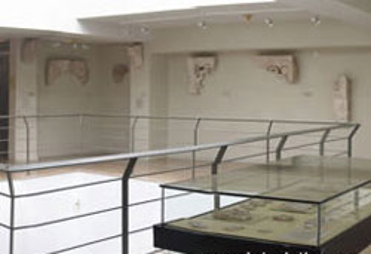
Opened in May 1999, it houses a magnificent sample of the archaeological patrimony of Cieza. It consists of four levels with a splendid sample of the archeological and ethnographic legacy of our territory, wich invites the visitor to explore the history otf the village from Palaeolithic to the early twentieth century. One of the most valuable treasures of this museum is the life-size reproduction of houses 6 and 10 of the arabic town of Siyâsa (located on the so called "Hill of the Castle"). Thes life-size Arabian houses contain arches and proticos from the almohad caliphate and the beginning of the pre-nazarie era, plasterwork and stuccoes that decorate floors and ceilings as well as a central patio that leads to all the rooms of the house. They really transport the visitors to another time.
PUERTO DE MAZARRÓN (MAZARRÓN)
Cerrado temporalmente
C/ La Torre esq. San Ginés
30860 - PUERTO DE MAZARRÓN (MAZARRÓN)
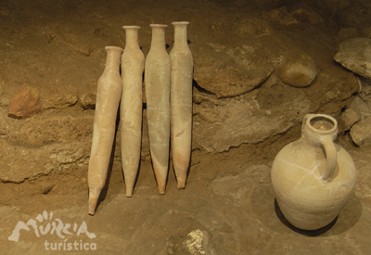
During Late Antiquity, the Port of Mazarrón was an important economic center on the Murcian coast linked to fishing activity. Next to the port facilities was located (during the 4th-5th centuries AD) a a large salting factory that occupied a large area on the right bank of the bay. The current museum preserves part of the structures of this important industrial complex dating from Roman times and used to manufacture salting fish and sauces. fish. The factory has been declared an Asset of Cultural Interest with an Archaeological Zone Category, through Decree No. 33/1995 of May 12 (BORM No. 141 of 06/20/95), both by the entity of the Roman complex, as well as for its extension, as well as for its contribution to the knowledge of the economic bases of the area, during the Roman imperial era. This Salting Factory is an example of the importance that the industries of the fish they had in the Roman period, when the products made in this type of company were essential in all the cuisine of the Empire. The characteristic elements common to all the factories were the salting pools or tanks, in which the fish was macerated with salt and different products were made, such as the so-called Garum, the most famous of fish sauces. and that reached very high prices in the Roman market. In the museum, in addition to the exhibition of the archaeological remains in situ of the Salting Factory, there is also an exhibition of the rich archaeological heritage that it has Mazarrón and the Port of Mazarrón.
MOLINA DE SEGURA
C/ Ibn Arabí s/n
30500 - MOLINA DE SEGURA
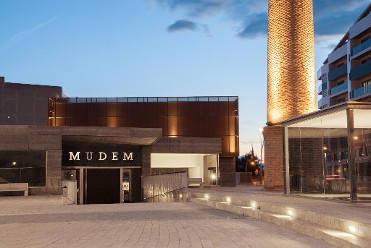
El MUDEM es un espacio cultural museístico para proteger y difundir los restos rescatados en 2004 en la muralla de Molina de Segura, el hisn Mulina andalusí. Un espacio con un enfoque lúdico e interactivo a la par que didáctico y reflexivo, que brinda la posibilidad de conocer mejor la historia de Molina de Segura en el contexto del antiguo Reino de Murcia. Lugar accesible para discapacitados. Teléfonos: 968 38 85 62 968 38 85 00 Ext. 2510.
MURCIA
Pza de Santa Eulalia 10-A
30003 - MURCIA
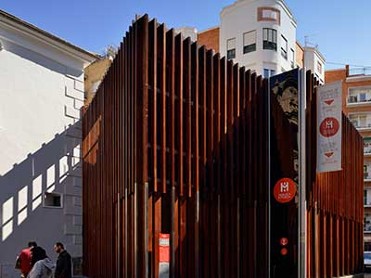
Visitors Centre of The Wall of Murcia.
MURCIA

Plaza Cardenal Belluga
30001 - MURCIA
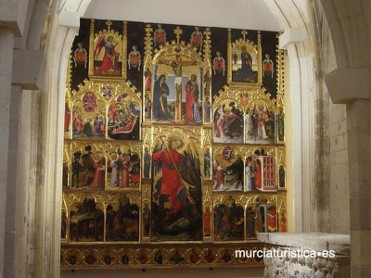
Museum of the Cathedral.
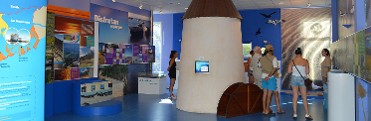
SAN PEDRO DEL PINATAR

Avda. de Las Salinas, s/n dirección puerto de San Pedro (junto a rotonda de los flamencos)
30740 - SAN PEDRO DEL PINATAR
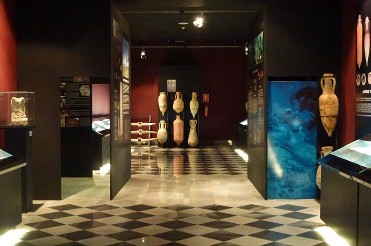
SAN PEDRO DEL PINATAR
Avda. de Orihuela, s/n
30740 - SAN PEDRO DEL PINATAR
Arqueología: Se ofrece una muestra de los principales hallazgos arqueológicos del municipio, tanto terrestres (La Raya), como submarinos, (Punta de Algas, San Ferreol, La Barra y El Mojón), así como una selección de fósiles y material de culturas prehistóricas del sureste. Junto al material descrito, existen una serie de paneles explicativos y maquetas, didácticos y amenos, que informan al visitante de los datos más significativos de las piezas expuestas. Etnografía: Este apartado está dedicado por un lado a la burguesía que se asentó en San Pedro del Pinatar a finales del siglo XIX, construyendo sus residencias de verano y participando en la vida social del momento, y por otro lado a las gentes de a pié, que con su trabajo y esfuerzo consiguieron levantar el municipio y llevarlo a los niveles actuales. Están representados algunos de los principales oficios que fueron el motor de la economía del momento: la pesca, la agricultura, las salazones y la salinera. Colección de juguetes antiguos: Se pueden contemplar más de 300 juguetes antiguos, cedidos o donados por colaboradores. Se hace un recorrido por la historia del juguete, desde los más antiguos tirachinas, canicas y trompas, hasta los primeros video juegos de ordenador. Colección de material cinematográfico antiguo: Proyectores antiguos, cámaras de fotos y material propio de las cabinas de proyección.
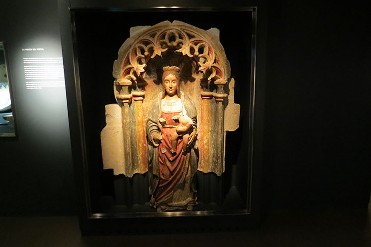
YECLA
C/ España, nº 37. Palacio de los Ortega (Casa Municipal de Cultura)
30510 - YECLA
El Museo cuenta con quinientos metros cuadrados de exposición permanente divididos en cuatro ámbitos culturales: Monte Arabí (Prehistoria), Cerro de los Santos (Protohistoria o Prerromano), Torrejones (Romanización) y Cerro del Castillo (Edad Media: periodo islámico y periodo cristiano). A través de sus doce salas se puede contemplar una magnifica selección de piezas que dan buena cuenta de la riqueza arqueológica del término municipal de Yecla. El Museo se creó en el año 1983 siendo heredero de la antigua Colección Arqueológica Municipal constituida y mostrada en exposición permanente desde el año 1958. El edificio que alberga el Museo Arqueológico Municipal fue en su origen el antiguo Palacio de los Ortega. Construido a finales del siglo XVIII conserva buena parte de su estructura original. En el siglo XIX el edificio fue adquirido por la familia Portillo, que ocupó y remodeló la parte noble del palacio según proyecto del arquitecto Justo Millán Espinosa (1888.) Las vidrieras, donde se representan los blasones de la familia, están fechadas en 1909 y constituyen una buena de este tipo de piezas ornamentales muy del gusto de principios del XX. Se fabricaron y adquirieron en talleres Maumejean de San Sebastián. En el año 1983 cuando el Ayuntamiento de Yecla adquirió el inmueble y lo rehabilitó como Casa Municipal de Cultura, albergando no solo en Museo Arqueológico Municipal sino también la Biblioteca Pública Municipal y el Archivo Histórico Municipal.
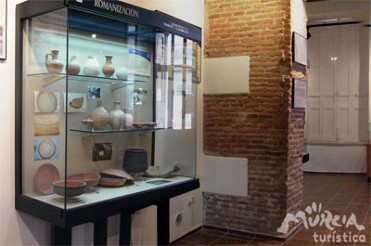
ÁGUILAS
C/ Conde de Aranda, 5
30880 - ÁGUILAS
Inside we can review the history of the town, from the Neolithic to the present day. it emphasizes the collection of Roman archaeology.
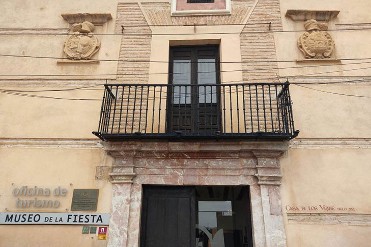
CARTAGENA
Pza. del Ayuntamiento, 9
30202 - CARTAGENA
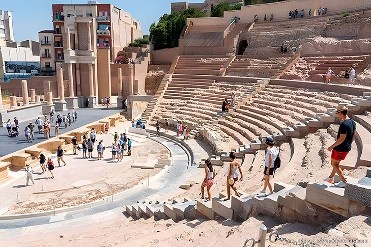
The Museum respond to the need for a museum space in which to bring together all the pieces found during the successive excavations of the Roman Theater. The Museum, designed by architect Rafael Moneo, incorporates the Riquelme Palace and the Church of Santa María la Vieja in the complex, making the Theater the last and most notable piece presented in the Museum. Through these exhibition spaces, visitors will be guided from the lower parts of the city to the interior of the Roman theater. Enjoy the Virtual Tour. Click here
CEHEGÍN
Plaza del Castillo, s/n
30430 - CEHEGÍN
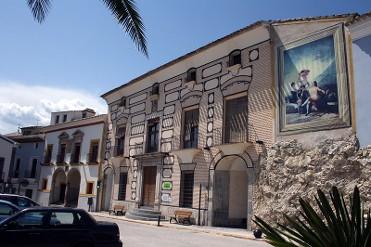
It currently provides 12 exhibition rooms, as well as a library and an information room. The museum consists of three buildings, two of which are historic ones. One is the old Town Hall, the Palacio de los Fajardo, inaugurated in 1676 and whose main façade and outbuildings were built in 1745 on the annexes of the 12th century castle. The other building is located in Calle Mayor and corresponds to a smaller noble house from the 18th century. Between them, the three buildings have a total floor area of more than 2,800 square metres.
CIEZA
Paraje del Estrecho. A 1 km de Cieza
30530 - CIEZA
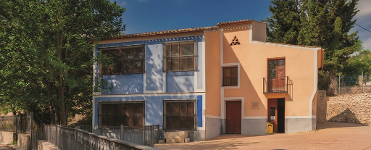
This hydraulics museum is localize in the peripheries of Cieza, in the right side of the Segura river from where it took the water to moved its machines. The first document about it is from the date of 16th November of 1507 and was used in the elaboration of fluor since that time until first years of the second half of the XX Century. This mill is know by different names through the time such as: Regidores Perpetuos at the beginning of the XVI century and at the end of this century also by the name of The Mill of the St. and later by Marín (1559), Andelma (1609) and Cebollar (1830). Since the beginningof the XX century the mill belong to the García family and is known by the name of its owner Theodoro, until nowadays. In the ground floor is localize the machines used in the milling and there happen the following steps: Cleaning: The wheat comes into bag to the ground floor and pass through the washing machine, the beating and the drying when lost most of its dirt like stones, straws etc, later its goes to a pit and when using an elevator goes to other machine when lost its husk and is ready to be milled. Milling. The bag with the wheat clean are drain in the mill which is milled by big stones, the end of this process is the obtaining of semolina which through an elevator goes to the first floor to be sift. In the first floor is localize the machines used to sift the semolina and end of this process is the obtaining of two products: The flour which is packet in bags and the rest of the semolina is divided by size using an air current and packet in bags too. In the basement is localize the aqueduct divide into the pars by a wall and two wood water wheels in a horizontal position, which have the function to transmit the power to the machines, and in the back side of the museum is the canal where the water pass with the function to move the water wheels.
PUERTO DE MAZARRÓN (MAZARRÓN)
Avda. Tierno Galván, 6
30860 - PUERTO DE MAZARRÓN (MAZARRÓN)
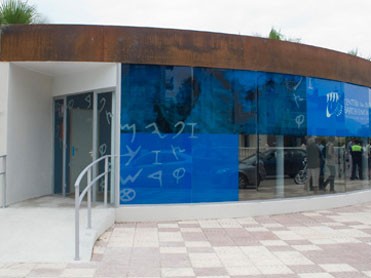
Sunken across from the Playa de La Isla two Phoenician boats have been located, as the oldest found in the Mediterranean. From the boat named “Mazarrón I” only the keel, some ribs and strakes have been found. The second Phoenician boat, “Mazarrón II” is almost complete and is preserved in situ across from the Playa de La Isla. Its dimensions are 8.10 m in length and 2.25 m in width, and it still held its entire load, made up mostly of lead ingots. The anchor was also found, in the “shaft, stock and nail” type, and it is the oldest known example found in the Mediterranean to date. The Phoenician vessels on Playa de La Isla, from the 7th century B.C., give valuable information about the Phoenician naval construction techniques, of cargo and maritime commerce. The discovery of the first boat took place in 1988, and the archaeological excavations on both ships occurred between 1993 and 2000, performed by the National Center of Sub-aquatic Archaeological Research (CNIAS).
MOLINA DE SEGURA
C/ Cid Campeador, 2 - Esquina calle del Castillo
30500 - MOLINA DE SEGURA
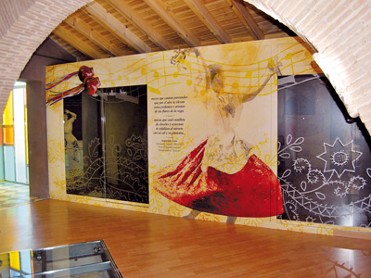
El Museo se ubica en el popular barrio del Castillo, en una casa del siglo XVII-XVIII, claro ejemplo de arquitectura popular, con una estructura original, realizada con la antigua técnica del tapial. Destaca la impresionante cúpula del horno moruno, del que hay noticias desde 1491. El horno perteneció al Concejo de la villa en la Edad Media, antes de formar parte del marquesado de los Vélez y estuvo en funcionamiento hasta los años 70 del siglo XX. Además de las labores del pan, el museo tiene una sección donde se muestra la música y bailes populares de Molina. Lugar accesible para discapacitados.
MONTEAGUDO (MURCIA)
Plaza Iglesia ,1
30160 - MONTEAGUDO (MURCIA)
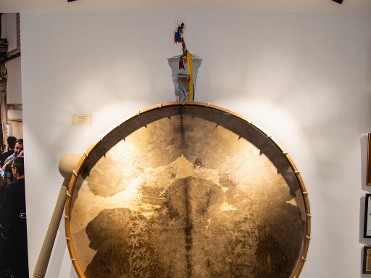
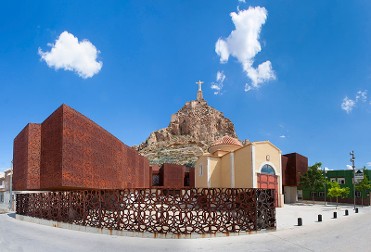
Visitors Centre of Monteagudo.
MURCIA
Plaza. San Agustín, 3
30005 - MURCIA
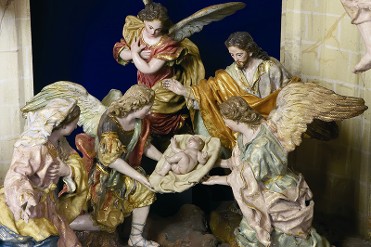
Salzillo Museum. It was opened in 1960 and deeply remodelled in 2002 by the architect Yago Bonet Correa. It is a mixture of typologies: we have the Baroque Art which is still alive under the watchful eye of the Church of Jesus, see of the Brotherhood of the same name and which was declared artistic historical monument from 1935; and also the Contemporary Art, created in 2002 by this architect. A mixture of styles which coexist in perfect harmony. In the outside, in the lateral façade we find a magnificent portal which belongs to the ancient Renaissance Palace of Riquelme (previously located next to the Plaza de San Bartolomé and currently disappeared). It is meaningful that this family also ordered Salzillo the sculpture set of the nativity scene in 1776. This project kept him busy until his death in 1783. In the church of Jesus the Nazarene, famous thrones of Francisco Salzillo are exposed and walk in file on Good Friday morning: "La Caída" (1752), "la Verónica" (1754), "San Juan" and "la Dolorosa", made between 1752 and 1777, "la Santa Cena del Señor" (1763), "la Oración en el Huerto" (1752), "el Prendimiento" (1765) and "Cristo amarrado a la columna" or "Los Azotes", which was made between 1776 and 1777 and the last throne of this maker of religious images. The carving which names the Brotherhood, "Nuestro Padre Jesús" (Our Father Jesus), an anonymous carving of the 16th and 17th centuries and the one which gives its own name to a brotherhood, is the only one that wasn't made by Salzillo. 556 figures, which form the famous "Belén" (Nativity scene) also highlight. These figures were ordered to Salzillo by the marquis of Riquelme, and also an interesting collection of original clay sketches.
CABEZO DE LA JARA (PUERTO LUMBRERAS)
Paraje Cabezo de la Jara, s/n
CABEZO DE LA JARA (PUERTO LUMBRERAS)
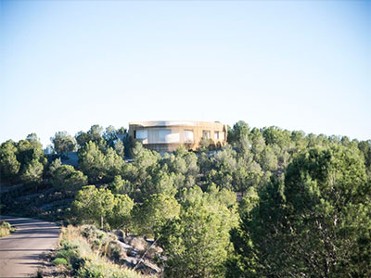
Come to know the stars and planets in the astronomical observations that are made in the Observatory of the Cabezo de la Jara. The Cabezo de la Jara is a natural site listed as SCI: Community Interest Place, located 8 km. from the urban area of Puerto Lumbreras and 1247 m. of altitude, without light pollution, which makes it an ideal place for observing the sky. Visitors will be received in the observatory's audiovisual classroom, where a talk will be given about the observation to be made and a video will be broadcast. Then an open sky observation will be made on the terrace enabled for it and finally visitors can make observations in the dome through the telescope.
SAN JAVIER
Ctra. Cartagena s/n
30730 - SAN JAVIER
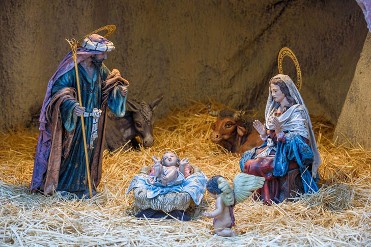
MUSEUM OF NATIVITY ART The Museum of the Nativity of Spain, located in the same building as the Local History Museum, showcases the most characteristic aspects of Christmas art in three rooms. The first section presents the joyful Mysteries of the life of Jesus. In the second section, various traditional scenes and occupations typical of the Region of Murcia can be observed. The third section features an international exhibition of Nativity art. The Nativity scene is displayed each Christmas in the Plaza de España in San Javier. The collection comprises approximately 500 Nativity figures.
SAN PEDRO DEL PINATAR
C/ Lorenzo Morales, 1 Edif. Hogar del Pescador, 1ª planta
30740 - SAN PEDRO DEL PINATAR