
Monuments
Torre Pacheco
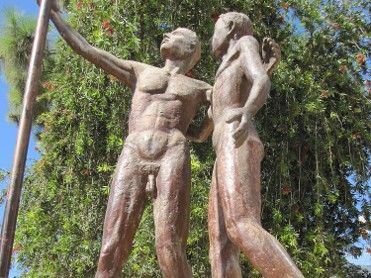
Sculpture by Maite Defruc, made in 2006. To commemorate the 170th anniversary of the Constitution of the municipality of Torre Pacheco, the artist Maite Defruc made this bronze sculpture under which the names of the mayors of this town to date are engraved. This work is located in front of the Vicente Noguera Exhibition Hall. It represents an old man showing his son how through the effort and work of the citizens they have contributed to improving the future of the municipality. This figure is in the Contemporary style.

Monuments
Cartagena
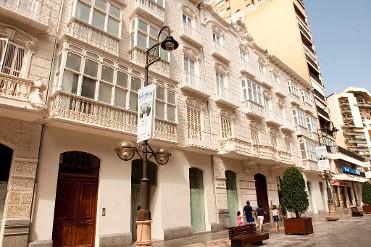
The façade, with curved mouldings and floral decorations, is inspired by the Baroque style. Inside, the most striking element is the Arab-style central courtyard.
Hotels
Roldan (Torre Pacheco)
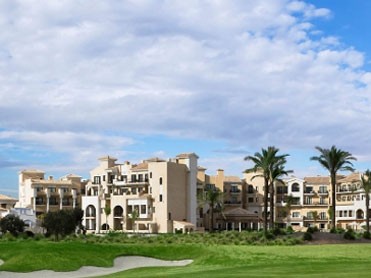
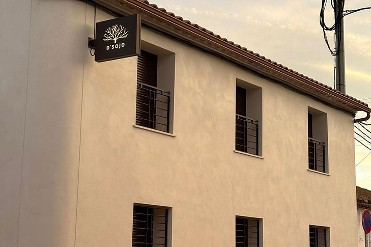
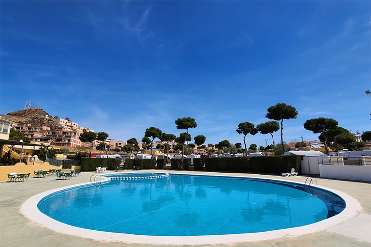
A contemporary and elegant lakeside retreat with panoramic views situated at the centre of La Torre Golf Resort. The hotel offers 122 spacious luxury rooms and 11 suites equipped with the latest technology, each with a balcony or terrace offering spectacular views and large marble bathrooms. The excellent gastronomy offered in the hotels 3 restaurants and bars is complemented by the resorts charming town centre nearby, offering lively nightlife and a variety of restaurants and bars. All guests have complimentary access to the Wellness Zone with indoor heated pool, unisex sauna and steam room as well as 6 spa treatment rooms The hotel is surrounded by La Torre Best Golf an 18-hole Par 68 golf course, a fantastic golf experience offering three challenging 18-hole golf courses designed by Nicklaus Design and all located within a 15 km radius.




Campsites
Águilas
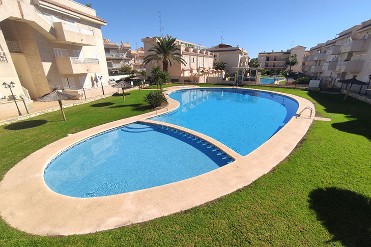
El camping esta situado en la Urbanización Los Geraneos en Águilas. Una zona tranquila y resguardada del viento. Águilas se encuentra en el punto más al sur de la Región de Murcia y hace frontera con Andalucía. Esta localidad costera te conquistará por sus playas, su historia y su encanto mediterráneo. Aquí puedes desconectar y sumergirte en otro mundo. Disponemos de restaurante y bar abierto al público. Donde tomar desayunos, aperitivos, tapas, comidas y cenas.
Holiday accommodation
Águilas
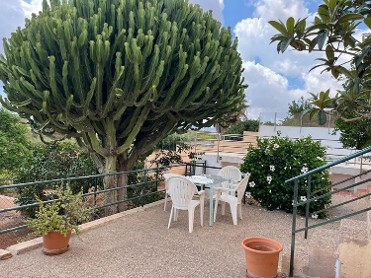
Apartamento coqueto en Águilas, en la urbanización de Los Collados. Es una zona residencial muy tranquila, y se encuentra a tan sólo 5 minutos de playa y de todo tipo de servicios, comercios, supermercados, etc. El alojamiento dispone de dos dormitorios, dos cuartos de baño, comedor, cocina independiente, lavadero, patio interior, terraza y plaza de garaje exterior en la puerta. Además, está dotada de aire acondicionado centralizado, wifi, y tiene acceso a dos piscinas comunitarias, amplios jardines y zonas de juego infantil.
Active tourism
Moreras / Bolnuevo (Mazarrón)
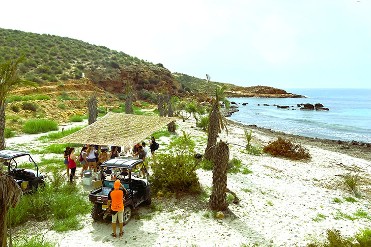
Ruta guiada en buggies 100% eléctricos por Las Calas de Bolnuevo y alquiler de bicicletas eléctricas, despedidas de solter@, Team Building, cumpleaños... - Alquiler de bicicletas eléctricas: 365 días al año, de 9:00 a 21:00. - Alquiler de buggies 100% eléctricos (ruta audioguiada): del 1 de mayo al 1 de octubre, para un máximo de 8 personas (4 buggies). - Alquiler de kayaks o paddle surf (travesía guiada): del 1 de junio al 1 de septiembre.


