SAMPER ALBALADEJO, SEBASTIÁN

Chemist's

Cabo de Palos (Cartagena)

SAMPER SAURA, ROCÍO DEL MAR

Chemist's

San Pedro del Pinatar

San Andrés Church
San Andrés Church

Monuments

Mazarrón

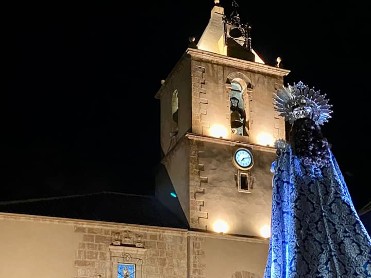
The San Andrés Church was built by the Marquis of Villena. From the original structure the main room has been conserved, distinguished for its handcrafted beauty, in the Mudéjar style. The rest of the building has been subjected to different restorations, giving it the architectural style that the church shows today. The interior still has some remains of parietal pictures and decorations. One of its two doors, the lateral one, corresponds to where the temple’s original entrance was, and as described by González Simancas during his early 20th century visit, it held the coat of arms of Guzmán, Cisneros, Enríquez and others, inscribed in circular flowers and fruits crowns and fruit in relief, in a style similar to the Junterón chapel within the Cathedral of Murcia. The San Andrés Church has been declared a Site of Cultural Interest.

San Antonio de Padua Church

Monuments

Mazarrón

At the feet of Los Vélez Castle hill, and within the population nucleus that would extend around it, the San Antonio de Padua church is located very near the San Andrés Church (16th century). The Church of San Antonio, completed in the second half of the 16th century, was ordered to be built by the Marquis of Los Vélez to provide space for the religious rites of the workers who lived in the villa and depended on him. The temple is a very simple construction, subjected to different reforms and changes in time, especially during the 19th and 20th centuries, when the cupola of the transept was repaired and a new bell tower and vestry were built. During the Civil War (1936-1939) the Baroque altarpiece and some smaller altars were destroyed, later to be substituted by pieces created to reproduce the original ones. Inside, the cupola of the transept is distinguished for its pendentives with paintings of saints. On the main facade, a niche of San Antonio de Padua is distinguished in addition to Los Vélez coat of arms.

SAN FRANCISCO SQUARE

Jardines

Cartagena

SAN ISIDORO AND SANTA FLORENTINA BATTERY

Lugares de interés

Cartagena

These two batteries constitute a single position, constructively connected. They were conceived in Esteban de Panón's project in the 18th century and finished in 1739. Its construction is elongated and parallel to the coast, and its current configuration corresponds to the latest reform of O'Donnell's Plan of May 8th, 1862. Their casemates are buried to protect them from enemy ships fire, leaving their backs open for better ventilation of gunpowder smoke. The ammunition dumps were buried and communicated through tunnels. Its main characteristic is its privileged situation to control the port mouth. It has the consideration of Heritage of Cultural Interest, in accordance with current second additional provision of Historical Heritage Act. Visible from the route of the Blue Trail in the Port of Cartagena. NO VISIT

San Javier - Punto de Información Turística Plaza de España

Tourist offices

San Javier

Punto de Información Turística en el edificio del Ayuntamiento de San Javier De lunes a viernes: de 09.30 a 13.30

San Javier - TOURIST OFFICE

Tourist offices

Santiago de La Ribera (San Javier)

Información turística local y regional. Lunes a viernes: 9.30 a 14 y 16 a 18.30 h. Sábados: 10.30 a 13.30 h.

SAN JOSÉ
SAN JOSÉ

Inns

Bullas

SAN JUAN
SAN JUAN

Tourist apartments

Murcia

Teléfonos: 968 355 862 610 520 678

San Juan de la Cruz en Caravaca

Caravaca de La Cruz

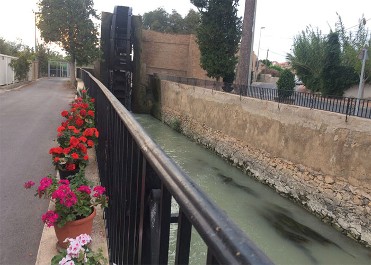
En el primer centenario de su nombramiento como Doctor de la Iglesia, y los 300 años de su canonización, recordamos en una ruta guiada el rastro del místico universal, San Juan de la Cruz, en la antigua villa de Caravaca, la cual visitó en siete ocasiones y en la que fundó un convento que cumple 450 años. Nacido con el nombre de Juan de Yepes, el cofundador de los Carmelitas Descalzos, junto con Santa Teresa de Jesús, se convirtió a finales del siglo XVI en el peregrino más ilustre de la Ciudad de la Cruz. Recorremos en esta visita los lugares más emblemáticos de sus estancias en Caravaca, como el convento cuyas puertas abrió y la ¿casica harto pobre¿ que según la tradición popular habitó. Se precisa reserva previa requerida. Salida desde el Templete-Bañadero a las 10:30h. Apta para todos los públicos. Recomendamos: Ropa y calzado cómodo. En fechas veraniegas: gorras o sombreros, protección solar y agua. Asistencia mínima para desarrollar la actividad: 10 visitantes. Cupo máximo: 25 inscritos. Rogamos a las personas que hagan reservas y tengan que cancelar por cualquier motivo, lo hagan por favor a través de la misma aplicación antes del evento para poder dejar esa plaza libre para otra persona. La Oficina de Turismo de Caravaca de la Cruz se reserva el derecho de suspender la visita por causas de fuerza mayor o fuertes inclemencias meteorológicas, en cuyos casos se avisará con la mayor antelación posible a los asistentes.

San Juan de las Águilas Castle

Monuments

Águilas

The Castle of San Juan de las Águilas perches on top of the headland of Punta Negra and a raised platform wich has attracted human settlers since prehistoric times. Archaeological investigations have revealed remains dating from the Chalcolithic, or Copper Age, including fragments of hand-crafted ceramics, flint tools and polished stone axes, one of wich is made from diorite and is now housed in the local Archaeological Museum. These materials belonged to groups of individuals who devotes themselves for a time to the collection of mollucs and other marine species along the coastline. In relation to the period of roman rule, excavations have uncovered numerous structural remains and materials: amphorae, common and luxury ceramics. Construction of the castle as we see it today dates back to 1756 during the reign of Fernando VI and was designed by military engineer Sebastián Feringán. It has been awarded Item of Cultural Interest status in the category of "Monument" and is inextricably intertwined with the history of Águilas: the foundation of the modern town coincided with the period when it was being built in the middle of the XVIII century. There are three main elements in the fortification: On the western side is the Fortress of San Juan, wuth a central courtyard, an artillery plattform, a first floor intended for accomodation and the kitchen and a ground floor used as a warehouse, gunpowder and prison. To the east is the gun battery of San pedro, where the guns and barbettes for defending the port were housed, and in between them a communication wich includes the forts of San José and San Felipe (whose role was to complete the defence of the stronghold.) Its restoration managed the defintely recovery od the castle, and now that it is fully visitable it is one of the most important examples of the town.

SAN LEANDRO BATTERY
SAN LEANDRO BATTERY

Lugares de interés

Cartagena

18th century fortification that is located next to the a Curra wharf. Its main mission was (in cooperation with the rest of the defence batteries of the port), to prevent enemy ships from entering. During the Civil War, on March 7th, 1939, two boats werLe seen from this battery, approaching the coast, being the closest one the "CASTILLO DE OLITE", which proceeded to the port and reached the harbour mouth, getting out of Parajola battery line of fire; when it was about to enter the port, from a small cannon in San Leandro battery, a shot was made, the boat turned round to go out to sea and in doing so she entered in the line of fire of Parajola, being finally sunk by a direct hit from one of the 3 Vickers guns in Parajola battery. Visible from the route of the Blue Trail in the Port of Cartagena. NO VISIT

San Pedro del Pinatar -  TOURIST OFFICE
San Pedro del Pinatar - TOURIST OFFICE

Tourist offices

San Pedro del Pinatar

Se facilita información a nivel municipal, regional, nacional e internacional (a demanda) Lunes a viernes: de 9 a 14 h. Sábados, domingos y festivos de 10 a 14 h. Cerrado: 1 de enero, Festividad de Santa Rita, 29 de junio, 16 de julio y 24, 25 y 31 de diciembre.

San Pedro del Pinatar - Punto de Información Turística Explanada

Tourist offices

Lo Pagan (San Pedro del Pinatar)

San Pedro del Pinatar - Punto de Información Turística Villananitos (ABIERTO JULIO, AGOSTO Y SEPTIEMBRE)

Tourist offices

San Pedro del Pinatar

Información a nivel local y comarcal. De lunes a viernes de 10.00 a 13.30 horas

San Pedro del Pinatar Bus Station

Bus stations

San Pedro del Pinatar

San Roque Hermitage
San Roque Hermitage

Monuments

Blanca

It is a baroque style building from the 18th century, a temple of small dimensions that has been very well restored. It consists of a single nave divided into three sections, covered with a barrel vault and a transept with a hemispherical dome. The presbytery is quadrangular, with a barrel vault and lunettes. The most significant feature of the church is the decoration of the mural inside the chapel. The main altar is presided over by the image of San Roque (during Lent and on the day of the pilgrimage), the patron saint of the church and patron saint of the municipality.

SAN SEBASTIÁN
SAN SEBASTIÁN

Hotels

Cieza

SAN SEBASTIAN SUITES

Tourist apartments

Cartagena

San Sebastián Suites son 4 apartamentos ubicados en Plaza San Sebastián, en pleno centro histórico de Cartagena. Su situación privilegiada les permite mirar desde y hacia la distancia, pudiendo obtener así una amplia visión de la ciudad. En cubierta dispone de una terraza donde se tiene una vista espectacular del entorno inmediato. Los apartamentos, “San Sebastián Suites” ofrecen la privacidad y flexibilidad de un hogar al mismo tiempo que brindan la comodidad de un hotel. Cada uno de los apartamentos tiene un encanto especial que se lo da la fachada, con los balcones y miradores típicos de Cartagena, y las diferentes alturas de sus techos. Además de sus cuidados interiores diseñados con materiales de primera calidad. Las 4 suites, están completamente climatizadas y equipadas, además ofrecen WIFI, servicio de limpieza y opción de parking. El emplazamiento de “San Sebastián Suites” permitirá disfrutar a sus huéspedes de todas los beneficios que ofrece alojarse en el centro de Cartagena. La proximidad al Puerto y Casco Histórico, con su oferta cultural y de ocio, además de centros comerciales, instalaciones y transportes públicos, lo sitúan en una ubicación inmejorable.


Versión accesible
Bono Turístico