Active tourism
Roda (San Javier)
La Marcha Nórdica consiste en andar con unos bastones especialmente diseñados para el desarrollo de esta actividad física, con el objetivo de optimizar el esfuerzo físico realizado en el movimiento biomecánico de nuestro cuerpo al andar. Esto se consigue gracias a la implicación del tren superior (brazos, hombros, espalda) que se suma a las piernas y cadera aumentando la eficacia del desplazamiento, aumentando la velocidad y realizando más kilómetros a la hora que en condiciones normales, o bien también, fatigándose menos en una misma distancia recorrida dado que el esfuerzo queda más repartido, haciéndolo en distintos grupos musculares. ACTIVIDAD CAMINO A LA SALUD: El caminar con bastones utilizando la técnica de Nordic Walking más adecuada a su forma física y vean el alcance de la práctica de la actividad para el uso específico que quieran hacer de ella (técnica), en cualquier caminata en el medio natural, de corto, mediano o largo recorrido, en la práctica diaria como entrenamiento deportivo o como movimiento saludable preventivo y rehabilitador. Mejora tu salud, tu forma física y tu figura. Reduce el Estrés y ayuda a perder peso”. El placer de caminar hacia tu SALUD
Monuments
Alcantarilla
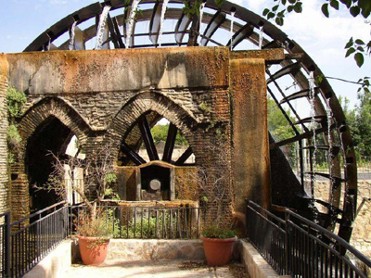
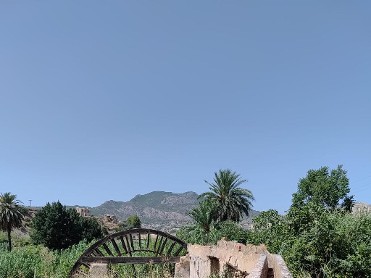
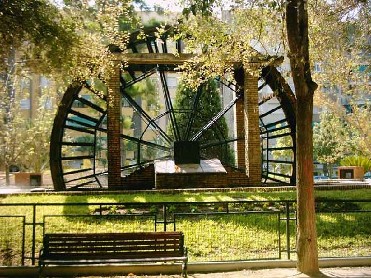
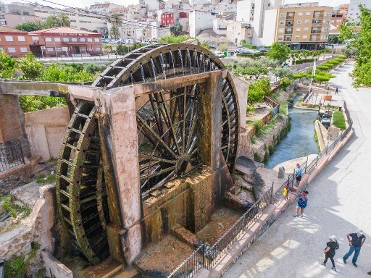
According to several archaeologists, engineers and architects the aqueduct and the brick walls where the water wheel stands reveals that there probably was a smaller wheel before. However, there is only documentation of its installation from the 15th century on July 10th, 1451. The current iron wheel was installed in 1956 by the Metallurgic Naval and Terrestrial Society from Alicante. The local wood artisans Francisco Ortiz and his son also took part in the design and assembly operations of this particular type of hydraulic engineering. The cost of this new device rose to around 1800 €, this was paid by more than two hundred owners that were members of the group “inheritance of the irrigation wheel”. The device is moved by the water from one of the two mother or main irrigation canals, the “Alquibla mayor” or “Barreras” which are located on the right side of the Segura River. This canal starts in a dam that controls the traditional irrigation system in Murcia. Thus, the wheel in this Museum is a typical wheel moved by water currents and as of such possesses the same likeness. Its diameter is 11 meters and it has 1, 90 meters by width. The two crowns or circular sides of this device have empty wheels integrated, this is where 72 buckets are located (36 per crown); its mouth opens to the outer side so the water is distributed by means of gravity. This happens due to the rotatory movement in two superior canals of the aqueduct at the maximum height of its gauge, 8 meters above the water. The crowns are fixed by the use of 24 spokes (12 x 12) which are fixed with struts every three buckets respectively. The distribution of the joists in each side create a double concentric ring with a polygonal perimeter. Between crown and crown, at the same level as every bucket and at a distance of 1 meter approximately, 36 rectangular paddles with parabolic profile are laid out concurrently. The water collides with the paddles and propels the elevating mechanism. The energy is produced through the impact of falling water from the wide canal. It is shaped more or less like a funnel as to help concentrate the force of the water flowing through it, and it is best put to use where the current rises at the narrowing of the channel, where vertically the parabolic paddlewheels are imposed. It is held on a solid horizontal axis of iron, rounded mild-grade steel and has 0, 40 metres in diameter in which the spokes converge between its two internal plates; they are cast in the same likeness. The ends of this shaft are embedded in steel ball bearings, which in turn fit into its sides, it is formed by strong brick walls with two arches on the aforementioned shaft and has dimensions which are 1,85 m by 2,10 m long respectively. The ridges flow through channels where the water is poured into buckets. This essential part of irrigations is found at the Museo Etnológico de la Huerta de Murcia. It was declared National Historical-Artistic Monument by the Royal Decree 1.757/1.982 of June, 18.
Monuments
Molina de Segura
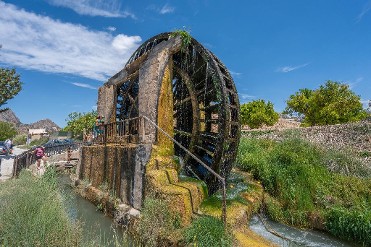
Una noria del siglo XVIII regaba en dicha época los huertos de la Casa Compañía, muy cerca de La Punta del Lugar. Los molinenses conservan este terreno, muy útil para conocer cómo era la cultura popular hace siglos. El Parque de la Compañía está situado en los terrenos donde se emplazó hace siglos la residencia de la Compañía de Jesús, que ya en 1590 tenía posesiones en Molina. La noria original fue instalada por los jesuitas en 1750 y estaba situada sobre la acequia Subirana. El emplazamiento actual, en pleno Parque de la Compañía, no es el original aunque sí cercano. Fue trasladada en la construcción del parque. Fue restaurada en 1993 por la Escuela Taller Municipal. Se rescataron los radios y gran parte de la estructura metálica original. Se añadió también toda la estructura de madera desaparecida.
Lugares de interés
Ojós
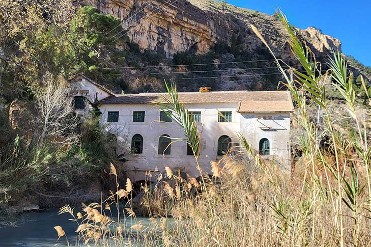
En Ojós localizamos un gran número de infraestructuras hidráulicas, que convierten a esta localidad en un punto de referencia en torno al uso del agua y su aprovechamiento. Podemos encontrar dos Centrales Hidroeléctricas (el Solvente y el Cajal), dos Centrales de Impulsión (una en el Azud de Ojós en el margen derecho del río y otra en el Paraje del Arco de la Mancomunidad Canales del Taibilla), así como la Presa del Mayés, túneles de los canales del trasvase, acueductos, sifones, etc. Existen también dos acequias que parten del río Segura, una es la de Ojós-Villanueva, que atraviesa el núcleo urbano abasteciendo un lavadero público y el antiguo molino harinero localizado junto a él. En la margen derecha también se localizan las norias del Solvente (se conserva solo la estructura de fábrica) y del Olivar así como el Molino de los Mazos. También encontramos la Acequia de Ojós-Ulea por la margen izquierda, donde se encuentra la Noria de la Ribera (de 7 metros de diámetro con armazón de hierro) y donde también se ubicaba la Noria de la Coya, de la que hoy día únicamente se conserva su estructura aunque sus dimensiones superaban los 13,5 metros de diámetro.

Monuments
Ulea
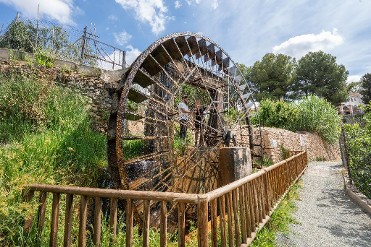
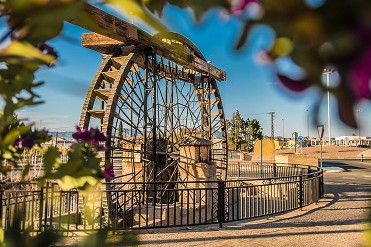
La Noria de Villar de Felices, también conocida como Noria de la Condesa o de Nicomedes, es uno de los elementos más representativos del patrimonio hidráulico tradicional del Valle de Ricote y uno de los símbolos históricos de la huerta de Ulea. Este antiguo ingenio hidráulico, restaurado y rodeado de naranjos, limoneros y otros árboles frutales, fue utilizado durante siglos para elevar el agua y regar los terrenos situados a mayor altura, permitiendo el desarrollo agrícola de la zona. Su funcionamiento se basa en la fuerza del agua, que impulsa la gran rueda de madera y llena los cangilones encargados de elevar el caudal hacia un acueducto de piedra construido sobre todo de posible origen romano. La noria descansa sobre sólidos pilares de sillería y forma parte del histórico sistema de acequias que abastecía las fértiles huertas tradicionales del municipio, reflejando la importancia de la cultura del agua en la historia y economía de la Región de Murcia. Además de su valor etnográfico e histórico, este enclave destaca por el entorno natural en el que se encuentra integrado, convirtiéndose en uno de los lugares más atractivos para disfrutar del paisaje, la historia y el turismo rural en Ulea y el Valle de Ricote. La combinación de ingeniería tradicional, patrimonio agrícola y naturaleza hace de esta noria una visita imprescindible para descubrir una de las señas de identidad más características de la huerta murciana.
Monuments
Lorquí
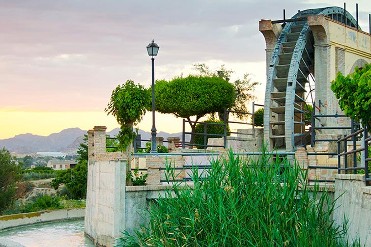
Esta vieja noria de hierro y madera, complejo hidráulico de 4'5 metro de diámetro, fue totalmente restaurada y hubo que consturir un nuevo canal de desagüe, obra en piedra y ladrillo, para sustituir el original, que se desmontó por el emplazamiento actual de la carretera y que funciona perfectamente cuando la noria se pone en movimiento.
Monuments
Lorquí
Es la más importante y conocida noria de Lorquí, conocida así por ser un hombre apodado el 'Rapao' su custodio durante muchos años. Se tiene constancia documentada de su existencia desde el siglo XVIII, aunque se cree anterior. Ambas están declaradas de Interés Cultural.
Monuments
Santiago de La Ribera (San Javier)
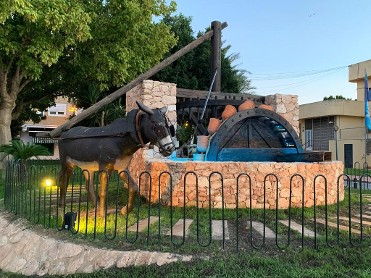
Waterwheel at the 'Torre Mínguez' Estate. The donations from the Barnuevo family, along with the Maestre mill and the funerary plaque of the founders of Santiago de la Ribera, which was placed on the church's facade after its restoration, are part of a process to recover the municipality's historical and cultural heritage. This initiative aims to transform the area into a large open-air museum. The waterwheel, now located just a few meters from its original site, was used to draw water on the estate that gave rise to Santiago de la Ribera. The restoration of the "ceña" (traditional waterwheel), which was in a state of clear deterioration, has brought it back to life. The water was drawn from a well with the help of an animal, which has also been recreated to give the site an educational character. The ensemble has been enhanced with monumental lighting.
Other events
Puerto de Mazarrón (Mazarrón)
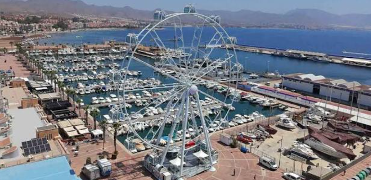
Para quienes se encuentren en la zona o tengan pensado visitarla, ya está operativa en el Puerto de Mazarrón la Noria Mirador Princess, una estructura de 45 metros de altura que se consolida como la noria más grande instalada hasta la fecha en la Región de Murcia. Esta instalación ofrece una opción de ocio diferente para contemplar el litoral y el entorno marítimo desde las alturas. Características principales de la atracción: Dimensiones: 45 metros de altura con vistas panorámicas de 360°. Cabinas: Climatizadas, con capacidad para 8 personas por cabina. Accesibilidad: Totalmente adaptada para personas con movilidad reducida (PMR). Horarios y disponibilidad: Periodo de apertura: Julio hasta el mes de octubre. Horarios de funcionamiento: Lunes a viernes: De 11:00 h a 14:00 h De 18:00 h a 00:00 h Sábados, domingos y festivos: De 11:00 h a 01:00 h (horario ininterrumpido) Ubicación: Puerto de Mazarrón. Nota informativa: Al tratarse de una atracción gestionada de forma externa por una empresa privada, las tarifas y precios de los billetes deben consultarse directamente en la taquilla del recinto. Una alternativa de ocio a tener en cuenta para las tardes y noches de verano en la costa.


Monuments
Dolores (Torre Pacheco)
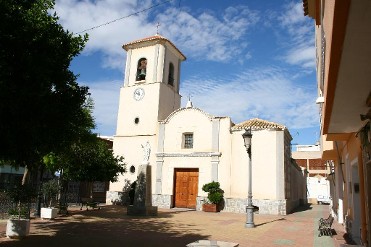
Located in the district of Dolores de Pacheco and catalogued in the Regional Service of Historical Patrimony of the General Direction of Culture. It has baroque origins and some architectural elements have been added. It has a nave with intercommunicating chapels open to the central nave through semi-circular arches, an altarpiece, and an interesting niche. At the foot of the church can be found the tower and the Chapel-Crypt of the Ayuso family, where several members of the family are buried. This chapel conserves paintings by Querubina Ayuso dated and signed in 1887. In 1906, the Bishop of Cartagena Mr. Vicente Alonso y Salgado transformed the chapel into a Rectory with its own baptismal font, and the priest who attended it from the Torre Pacheco parish took charge of it. The image of the Virgen de los Dolores was burned along with other images and liturgical ornaments during the Spanish Civil War, specifically on the night of July 23rd, 1936. But later, in 1940, it was created again by the sculptor José Sánchez Lozano. The new image of the Virgin Mary was crowned by the Bishop of Cartagena Mr. Ramón Sanahuja y Marcé on the 19th of September 1954.
Monuments
Torre Pacheco
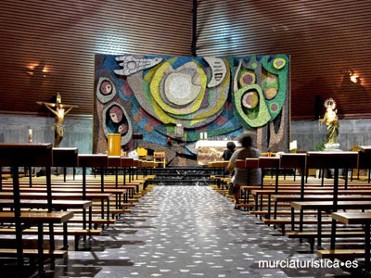
This building of worship is dedicated to the Virgin of the Rosary (Señora del Rosario), patron saint of Torre Pacheco, whose feast day is celebrated on October 7th. It is a popular invocation, and some municipalities coincide because in The Battle of Lepanto, the Spanish soldiers won against the Ottoman Empire thanks to praying the rosary becoming " The Lady of Victories" and becoming popular. The old temple was demolished in 1971. Later the current church was built with a polygonal floor plan, unusual for religious temples in the area. The altarpiece called "The Creation", by Jesuit priest Javier Zurbano, executed with the parishioners is particularly noteworthy. It consists of a mosaic made from stone cubes from El Cabezo Gordo bathed in colour. It has this name because it contains all the elements of creation: • Trees and vegetal elements (on the right) • Sea and fishes (bottom) • The family or humanity represented by St. Joseph, the Virgin Mary and baby Jesus (left) • The stars: This part is curious because the Holy Spirit is not represented by a dove but by a rocket. The same way that a moon surprises us with a footprint on it. It is a reference to the arrival of man on the moon, an event that took place in 1969, coinciding with the construction of the new church. The sun also appears, symbolising the sacred form. The most outstanding sculptures are the crucified Christ and the Virgin of the Rosary, the latter being the work of José Sánchez Lozano, the greatest representative of the 20th century of the imaginary current based on the style created by Salzillo. The church also houses a wooden sculpture of the Virgin of Carmen, patron saint of the sea, and a small Virgin of the Swan, which is a highly venerated invocation in Ecuador.
Holiday accommodation
Cehegín
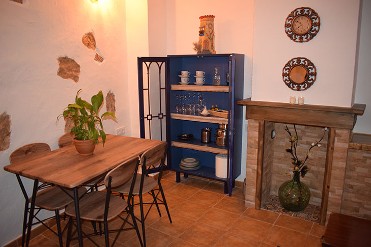
Nuestro apartamento esta situado en pleno casco antiguo, a escasos metros de la oficina de turismo, edificios de interés y zona de restauración. Hemos creado un apartamento donde el descanso del visitante ha sido nuestra máxima, un apartamento cálido y con ALMA; con una decoración de ayer, pero con las comodidades de hoy. Una casita pequeña, pero con todas las comodidades, en cuyo interior se conservan varios muros de adobes de finales Siglo XVI. Horario: 24H, acceso con cajetín. Servicios: Aire acondicionado, amenities gratis, frigorífico, calefacción individual, garaje de pago, plancha, secador de pelo, televisión y Wifi gratis.
Hotels
Caravaca de La Cruz
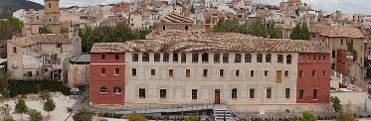
Ponemos a tu disposición un monasterio de más de 400 años, fundado por San Juan de la Cruz, totalmente restaurado, en el centro de la ciudad, y a diez minutos a pie del Santuario de la Santísima Cruz. Nuestra hospedería está catalogada como Hotel Rural. Tiene todas las comodidades necesarias. Todas las habitaciones con baño completo, calefacción y aire acondicionado, wifi gratuito. Sala de reuniones, de televisión e internet, servicio de comedor -comida casera- y acceso para minusválidos. Parking privado y gratuito. Tenemos portero de noche -sin horario de cierre-. Existen diversas capillas para la oración personal e Iglesia con la posibilidad de participar en el culto diario. Una estancia entrañable y confortable, en un ambiente de paz, con un absoluto respeto por las creencias personales y la vivencia religiosa de cada huésped. Se garantizan días inolvidables de descanso, silencio y tranquilidad. Lugar idóneo para el turismo familiar, para el disfrute personal o en grupos.