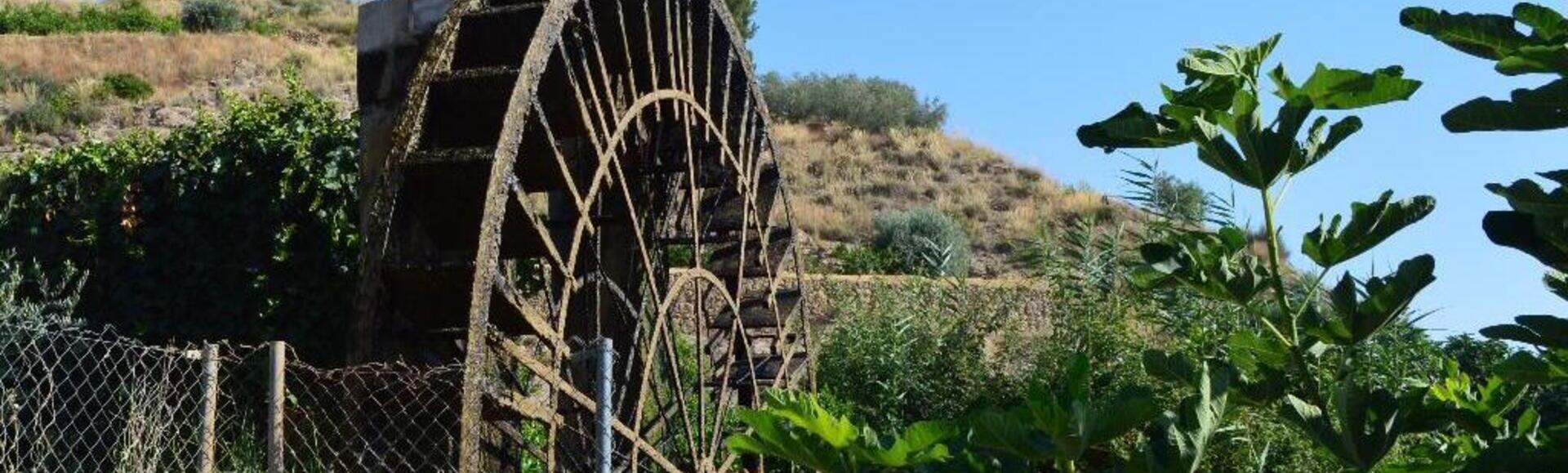
In Abarán and on both banks of the Segura River we find the region of Murcia's foremost set of traditional norias, or waterwheels, still used today to irrigate orchards and groves of fruit trees.
These waterwheels are fed by water from two acequias, or irrigation canals - Charrara and Principal - which take the waters of the Segura upstream, at Menju.
The pedestrian route linking the waterwheels, stretching just over one kilometer, runs through a river and agricultural landscape of ethnographic interest in the heart of the Ricote Valley.
THE WATERWHEELS
The Arabs were not the inventors of the waterwheel, but they put them to greater use than any other group.
A waterwheel is an efficient machine that, exploiting hydraulic energy, a renewable resource, raises water from an acequia, or irrigation canal, to a higher one, thereby increasing the area of irrigable land.
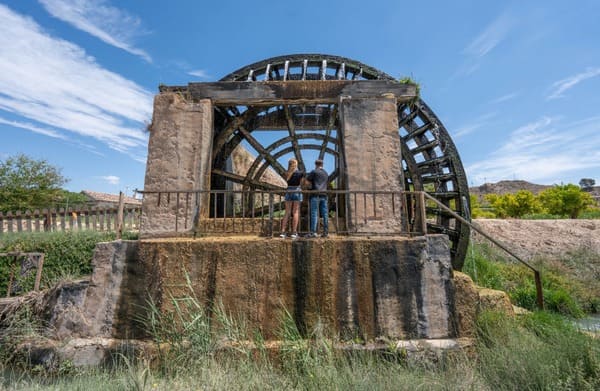
Entirely built of wood, it is still very well preserved.
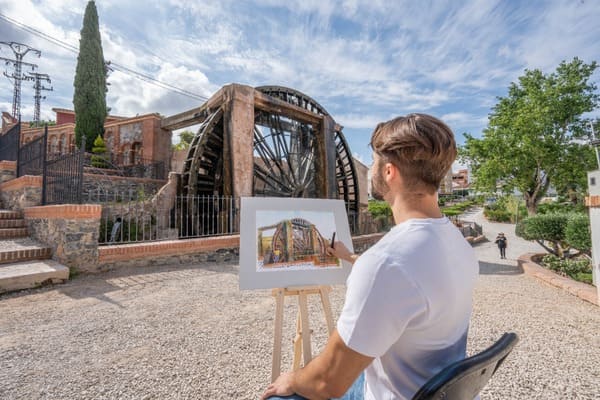
Reputed to be Europe's largest functioning waterwheel.
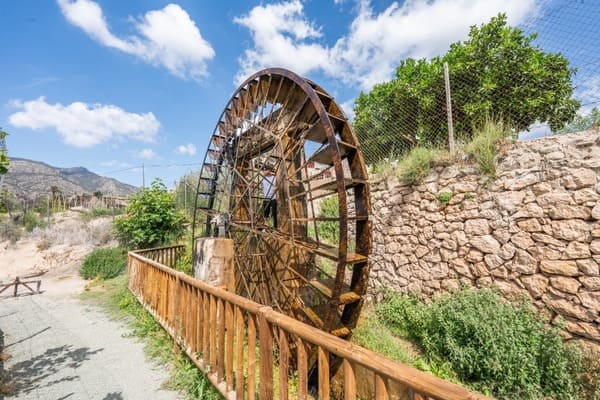
was built in 1850 and remodeled in 1968, respecting the original structure
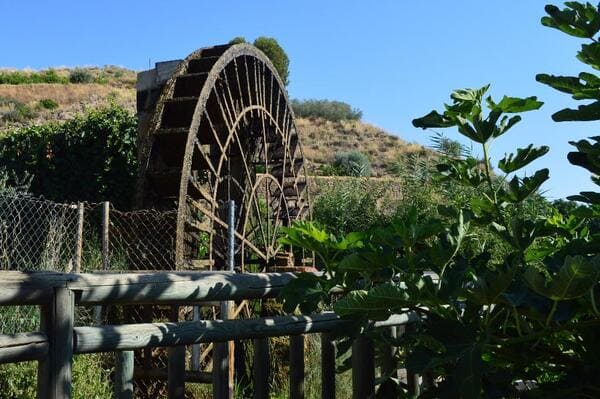
Is the smallest in Abarán (hence its name, in the diminutive), It is metallic, with some wooden elements,

If there is a place where the sensitivity of the Moorish culture can still be found it is Valle the Ricote. The twisting irrigated areas, the river and a special charm make this valley a real delight for explorers and people looking for genuine experiences. If you are an enthusiast of good food, cultural visits, and outdoor sports such as hiking, rafting or climbing then you are at the right place.
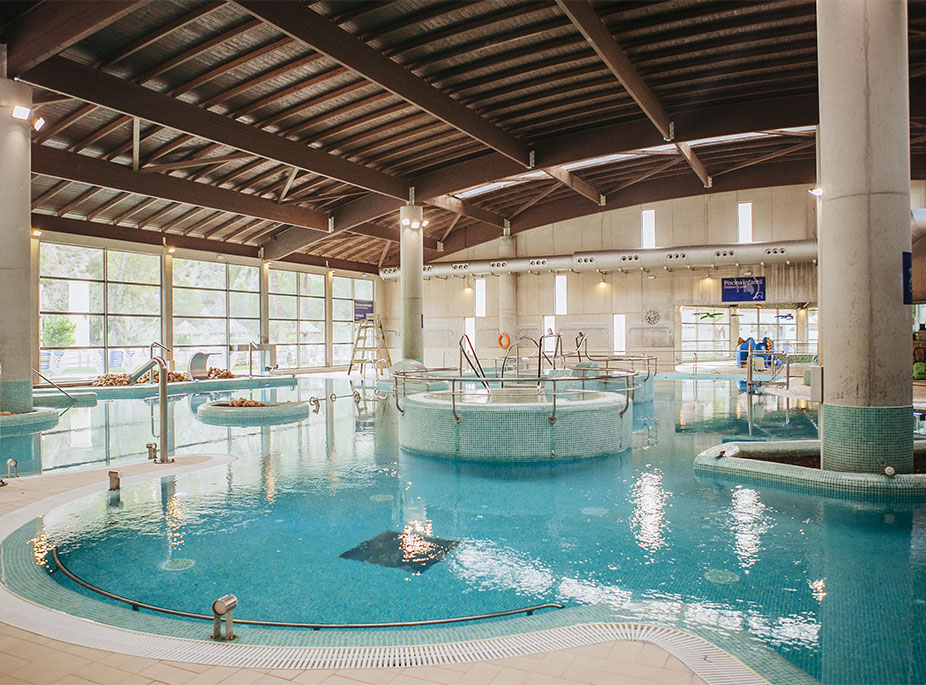
Whether you fancy a long health care stay or you just have a couple of hours to spare, we recommend you take advantage of one of Spain's best balnearios -thermal spring spas-, which is only a few minutes away from the capital city. Being under mineral-medicinal water jet streams, surrendering to the best massagers' hands and enjoying the latest health and wellness treatments are the best ways of improving your quality of life.
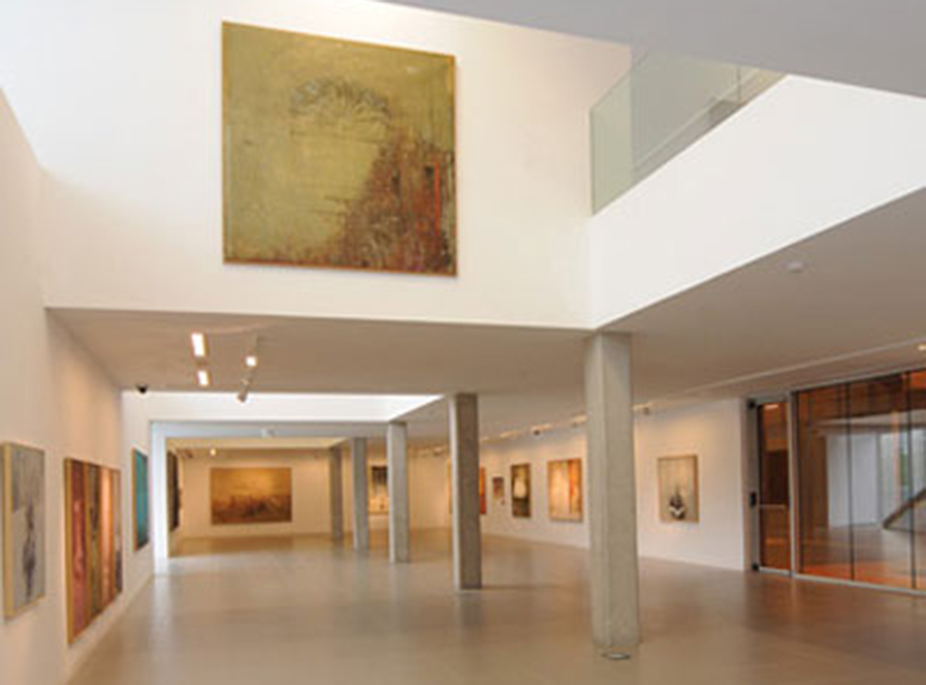
In Blanca, at Valle de Ricote's heart, you will find an excellent museum which houses the collection by Pedro Cano, the great Murcian painter. It is definitely an unexpected delight for those who are keen on beauty, peace and understanding, in a place where the Christian, the Jewish and the Muslim cultures lived together for centuries.
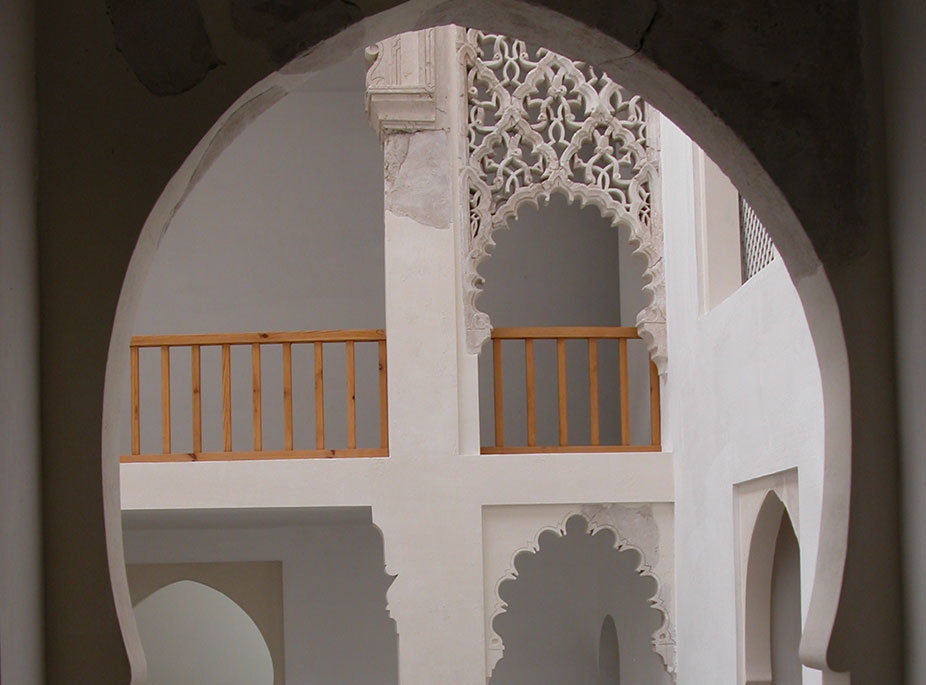
Another place which is worth a visit is Medina Siyâsa Arab deserted spot, one of the most important sites of the western Islamic world. You can still visit the inside of its houses to see how its people used to live. Don't forget to take some water, comfortable shoes and a cap with you for this excursion. The second part of the experience will take place at Siyâsa museum, housing remains from the Paleolithic period until the Andalusi period, and where the life-sized reproduction of two houses of the deserted spot stands out.
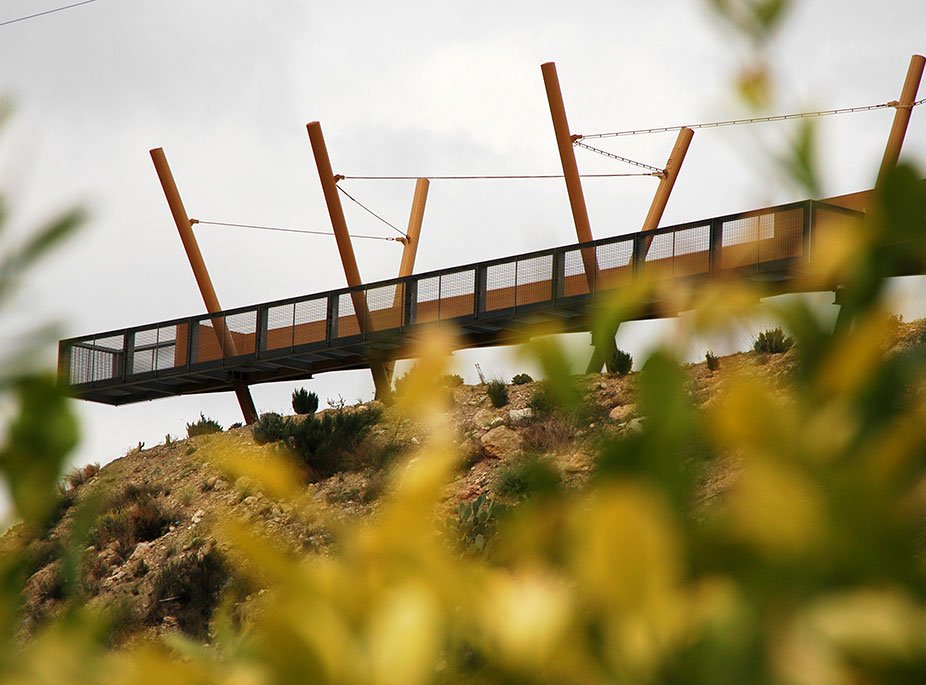
One of the best ways of experiencing Valle de Ricote is by walking along its paths and discovering its best panoramic views. We suggest you follow this route and enjoy the dreamiest viewpoints of the valley in Abarán, Blanca, Ricote, Ulea, Ojós and Villanueva.
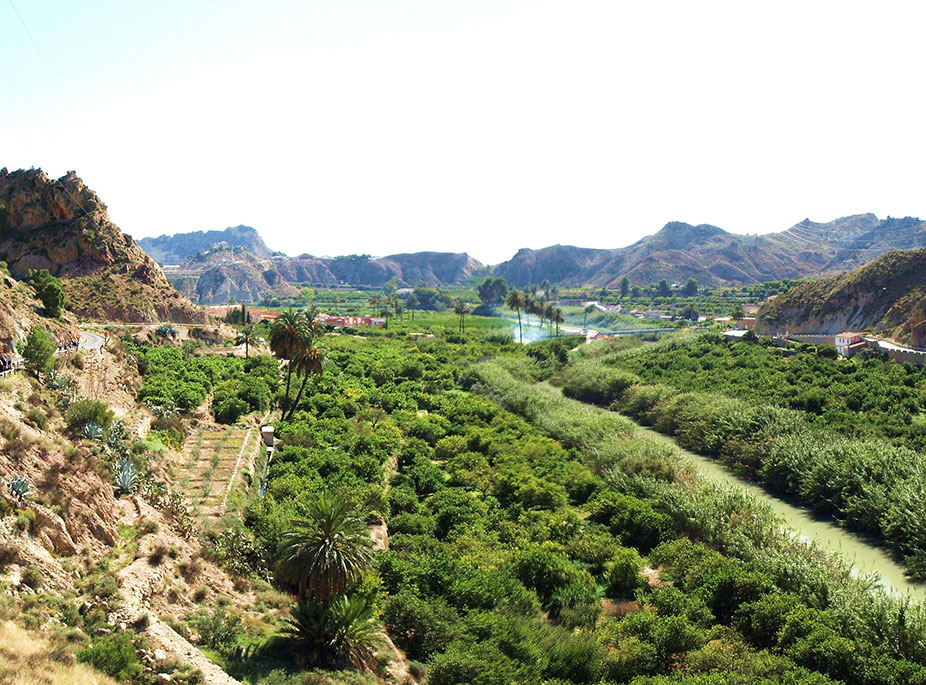
If you enjoy love stories, you can't miss the Salto de la Novia in Ojós. A legend tells of how a noble Christian girl threw herself down the rocks of this beautiful setting after losing her lover, who was an officer of the Castilian troops fighting against the Moorish army which tried to conquer Ulea. Due to its hauntingly beautiful views and its special charm, this is one of the most splendid places in Valle de Ricote.
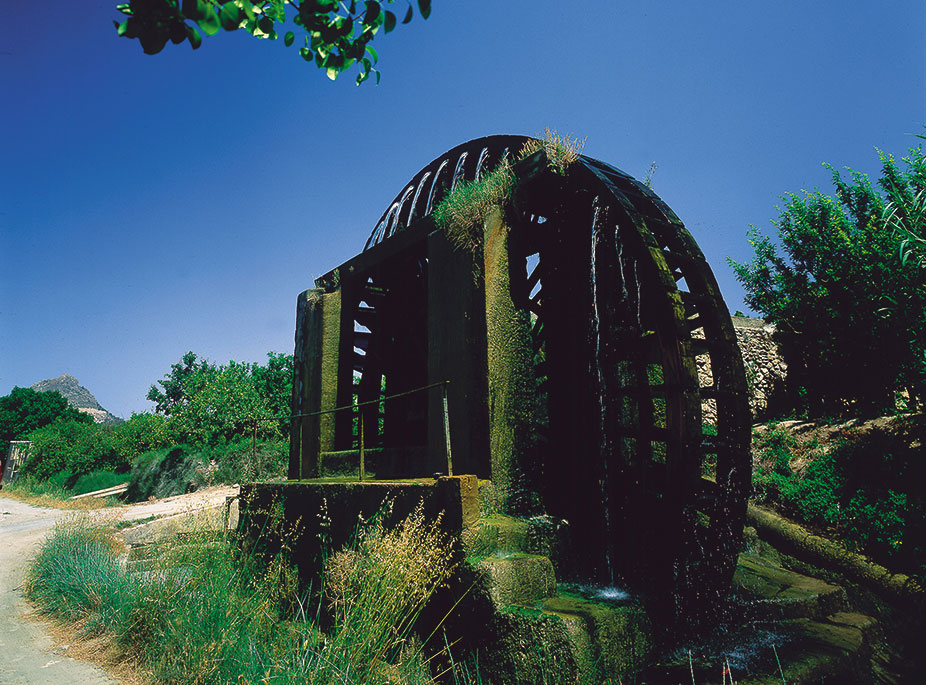
Abarán is well known for its waterwheels, being the Spanish municipality with the biggest number of still working waterwheels and also the municipality with the hugest working waterwheel in Europe. Don't forget that, next to waterwheels, you will have the privilege of admiring the huertas -irrigated areas-, irrigation ditches and palm groves. A treat for your senses.
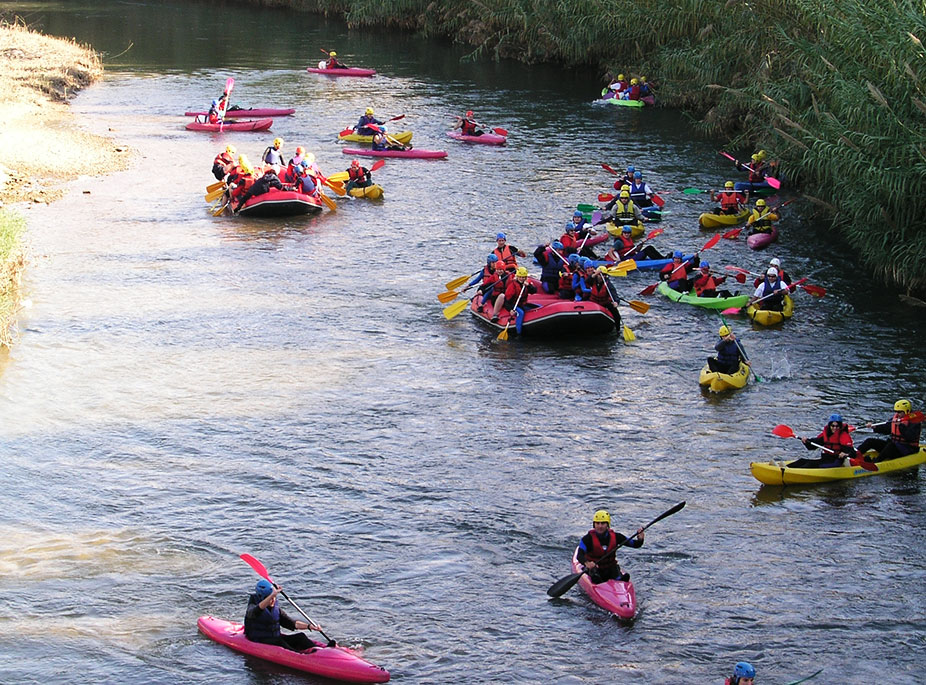
Going down the river on a raft, a canoe or a kayak is here one of visitors' favourite activities, since the river Segura is perfect for it in this valley. You can choose between tourist, quiet stretches and rapids such as the ones in Almadenes Canyon, which will give you a rush of adrenaline. This valley is also the perfect place for a peaceful beach day away from the coast: Abarán and Blanca have river beaches with facilities and even a chiringuito -beach bar-.
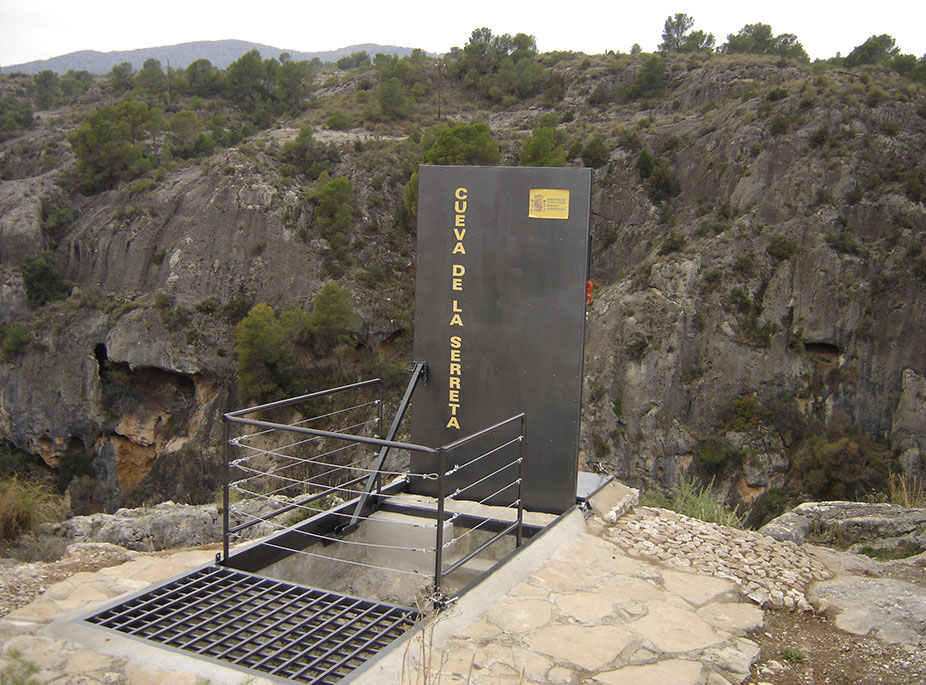
If you want to have a stunning experience, don't miss the Almadenes Canyon in Cieza, which is one of the region's most beautiful and hidden natural settings. Its walls, some 150m high at some points, have lots of caves and caverns covered with cave paintings which have been declared to be a World Heritage by UNESCO. The La Serreta Cave-Chasm is here a reference, with 50 figures inside it and a view from the heights that will leave you speechless. If you combine this with a river descent, a zip line ride or any other active tourism activity available in the area, you will enjoy an unforgettable visit.
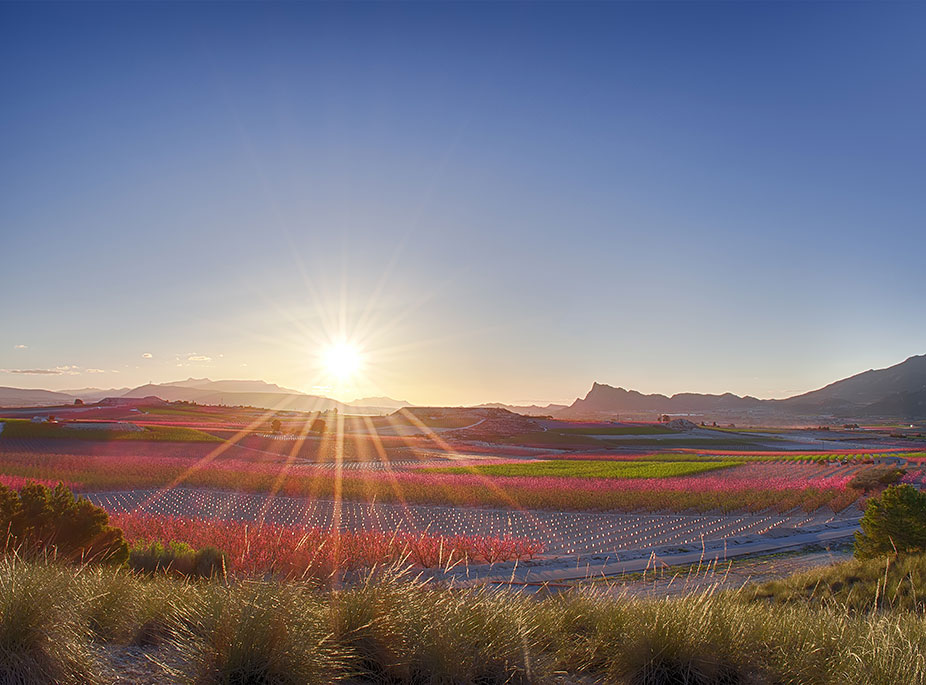
Wherever you are, you can't miss this route. Between February and April, Cieza celebrates one of nature's greatest shows: the blooming period. Fruit trees such as plum trees and peach trees give colour and multiple scents to valleys and landscapes of the huerta. This is a wonder of nature, brief but faithful to its appointment every year. During this period, plenty of activities related to blooming are celebrated, aimed at visitors and locals.
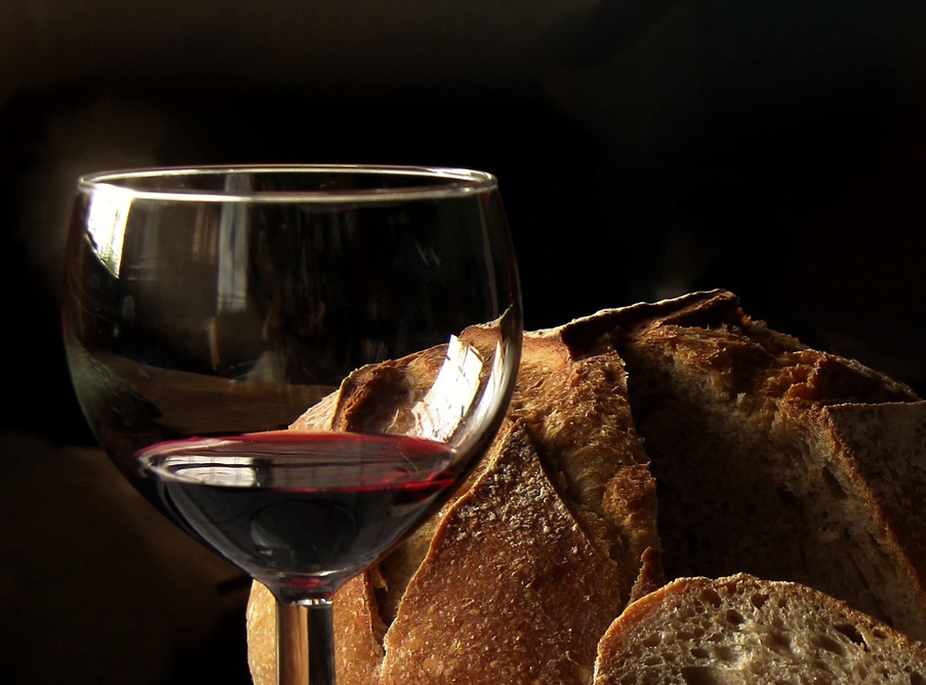
The Moorish sensitivity of Valle de Ricote can still be found in its cuisine: you won't be able to come back home without taking some of this place's delicacies with you. Some of the souvenirs which will make you miss your journey once you are back at home are the following: borrachos from Ojós -sponge cakes soaked in syrup and wine from the area-, picardías from Abarán -made with sugar and hazelnuts-, cordiales made with almonds, and homemade honeys. The area's best-kept secret is Ricote wine, a short crop wine with little commercialisation but really unique scents and flavours.
Whether you fancy a long health care stay or you just have a couple of hours to spare, we recommend you take advantage of one of Spain's best balnearios -thermal spring spas-, which is only a few minutes away from the capital city. Being under mineral-medicinal water jet streams, surrendering to the best massagers' hands and enjoying the latest health and wellness treatments are the best ways of improving your quality of life.
In Blanca, at Valle de Ricote's heart, you will find an excellent museum which houses the collection by Pedro Cano, the great Murcian painter. It is definitely an unexpected delight for those who are keen on beauty, peace and understanding, in a place where the Christian, the Jewish and the Muslim cultures lived together for centuries.
Another place which is worth a visit is Medina Siyâsa Arab deserted spot, one of the most important sites of the western Islamic world. You can still visit the inside of its houses to see how its people used to live. Don't forget to take some water, comfortable shoes and a cap with you for this excursion. The second part of the experience will take place at Siyâsa museum, housing remains from the Paleolithic period until the Andalusi period, and where the life-sized reproduction of two houses of the deserted spot stands out.
One of the best ways of experiencing Valle de Ricote is by walking along its paths and discovering its best panoramic views. We suggest you follow this route and enjoy the dreamiest viewpoints of the valley in Abarán, Blanca, Ricote, Ulea, Ojós and Villanueva.
If you enjoy love stories, you can't miss the Salto de la Novia in Ojós. A legend tells of how a noble Christian girl threw herself down the rocks of this beautiful setting after losing her lover, who was an officer of the Castilian troops fighting against the Moorish army which tried to conquer Ulea. Due to its hauntingly beautiful views and its special charm, this is one of the most splendid places in Valle de Ricote.
Abarán is well known for its waterwheels, being the Spanish municipality with the biggest number of still working waterwheels and also the municipality with the hugest working waterwheel in Europe. Don't forget that, next to waterwheels, you will have the privilege of admiring the huertas -irrigated areas-, irrigation ditches and palm groves. A treat for your senses.
Going down the river on a raft, a canoe or a kayak is here one of visitors' favourite activities, since the river Segura is perfect for it in this valley. You can choose between tourist, quiet stretches and rapids such as the ones in Almadenes Canyon, which will give you a rush of adrenaline. This valley is also the perfect place for a peaceful beach day away from the coast: Abarán and Blanca have river beaches with facilities and even a chiringuito -beach bar-.
If you want to have a stunning experience, don't miss the Almadenes Canyon in Cieza, which is one of the region's most beautiful and hidden natural settings. Its walls, some 150m high at some points, have lots of caves and caverns covered with cave paintings which have been declared to be a World Heritage by UNESCO. The La Serreta Cave-Chasm is here a reference, with 50 figures inside it and a view from the heights that will leave you speechless. If you combine this with a river descent, a zip line ride or any other active tourism activity available in the area, you will enjoy an unforgettable visit.
Wherever you are, you can't miss this route. Between February and April, Cieza celebrates one of nature's greatest shows: the blooming period. Fruit trees such as plum trees and peach trees give colour and multiple scents to valleys and landscapes of the huerta. This is a wonder of nature, brief but faithful to its appointment every year. During this period, plenty of activities related to blooming are celebrated, aimed at visitors and locals.
The Moorish sensitivity of Valle de Ricote can still be found in its cuisine: you won't be able to come back home without taking some of this place's delicacies with you. Some of the souvenirs which will make you miss your journey once you are back at home are the following: borrachos from Ojós -sponge cakes soaked in syrup and wine from the area-, picardías from Abarán -made with sugar and hazelnuts-, cordiales made with almonds, and homemade honeys. The area's best-kept secret is Ricote wine, a short crop wine with little commercialisation but really unique scents and flavours.