

Hotels
La Manga del Mar Menor
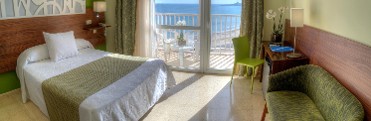
El Hotel Entremares de 4 estrellas, es enclave único y privilegiado por encontrarse en verdadera primera línea de playa del Mar Mediterráneo, en el primer kilómetro de La Manga y entre dos mares. El acceso directo desde la piscina a la playa, la situación geográfica excepcional, junto al pueblo pesquero de Cabo de Palos, y las extraordinarias comunicaciones con: Cartagena (25 km), Aeropuerto de San Javier (35 km), Murcia (70 km) y Alicante (130 km), hacen que el Hotel Entremares sea la mejor elección para todas aquellas personas que desean disfrutar de sus vacaciones a orillas del Mediterráneo. Dentro de nuestro centro de Talasoterapia se puede disfrutar de diferentes tratamientos de relax, salud, estética y belleza. Entre nuestras instalaciones destacan: piscinas termales (con agua de mar con chorros y burbujas), Spa, sauna seca, baño de vapor, jacuzzi, duchas aromáticas, pozo de hielo, cama hidrojet, cabinas de masajes, cabinas de envolturas, salón de estética, etc. Igualmente, el departamento de animación ofrece programas de entretenimiento tanto para niños como para adultos, con juegos, talleres y diversas actividades deportivas realizadas en las instalaciones interiores o exteriores del hotel o en la playa.
Hotels
Librilla
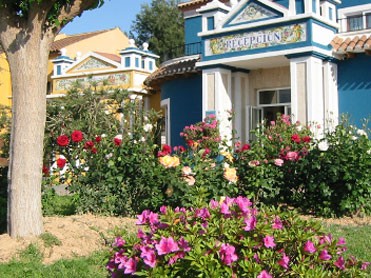
En un Valle encantado, entre las Sierras de Espuña y Carrascoy, se esconde el Hotel Entresierras: Oasis del caminante, campamento del aventurero, paraíso del turista y hogar de todos los que descansan en él. Situado en el centro geográfico de la Región de Murcia se encuentra el Hotel Entresierras, un lugar ideal para aquellos que les gusta perderse del mundo , estando cerquita de todo. Su céntrica ubicación facilita el poder desplazarse en trayectos cortos a ciudades como Lorca, Alhama de Murcia, Aledo, Totana, Mazarrón y Murcia. Edificado en horizontal, sigue los cánones de la estructura de Road/Motel americano, esta a pie de carretera lo que nos otorga gran maniobrabilidad en los contactos y desplazamientos. Su edificación está armónicamente integrada con el paisaje agreste de las montañas que nos dan nombre. La amplitud de sus espacios abiertos contemplan unas instalaciones confortables y muy tranquilas, que unidas al buen trato de nuestros empleados y un servicio casi personalizado, harán las delicias de nuestros huéspedes. Situado junto a la Autovía del mediterráneo, el Hotel Entresierras es ideal para aquellos que viajen con su vehículo, que les gusta moverse con libertad, explorar una Región llena de sorpresas, sabiendo que al final de la jornada descansará como en su propia casa.

Monuments
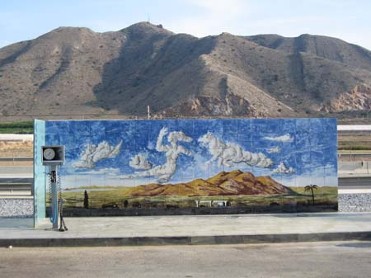
San Cayetano (Torre Pacheco)
Mural by Jorge Fin made in 2006. This work is located on the "Island of the Arts" facing the mural "Igneous Shadows". According to the author, it offers a melancholic vision of el Cabezo Gordo mountain some years ago when the quarry had not started to develop its activity. The pavement just below the mural is made from the stone extracted from el Cabezo Gordo quarry. In his paintings, the artist seeks a timelessness and unreality that will give our imagination the maximum intensity. He tries to build his own worlds of cryptic appearance with disturbing scenarios, to feel the intrigue of an unreal but possible image.
Monuments
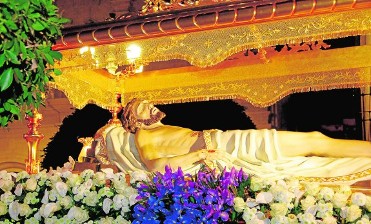
Molina de Segura
Se encuentra en el barrio del Castillo, siendo sede de la Cofradía del Santo Entierro. Según Manuel Arnaldos, en el lugar que hoy ocupa existió la antigua ermita de San Roque, también llamada de la virgen de la Caridad o de la Cabeza. Alberga tallas del escultor local Bernabé Gil Riquelme
Monuments
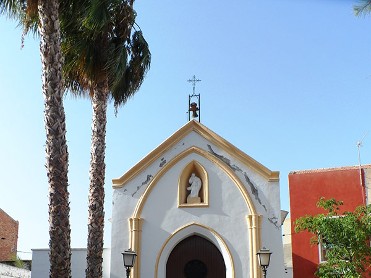
Alguazas
¿Sabías que uno de los primeros usos que se dio a esta ermita fue como lugar de enterramiento? Hay que remontarse al año 1796 cuando las obras en la parroquia de San Onofre obligó a utilizar este edificio como lugar de enterramiento. Tres años después el espacio se estaba quedando tan pequeño que se decidió adquirir los terrenos colindantes para habilitarlos como cementerio, compra que sufragó el segundo Marqués de Camachos. Si te fijas bien, aún se pueden contemplar en el interior de la ermita lápidas o restos de las mismas. De hecho allí mismo hay enterrados personajes relevantes para la villa como el ministro de Fernando VII Pedro Regalado. En 1850 la pequeña capilla se amplió, añadiendo una pequeña sacristía y una casa para el ermitaño. Durante años el edificio fue objeto de reformas que llegaron a elevar el piso de la nave setenta centímetros. Se eliminó la casa del ermitaño y también se talaron los primitivos árboles así como el enrejado del atrio. Las obras volvieron a realizarse en 1997 para que la ermita recuperara nuevamente el nivel original del suelo hasta obtener el estado que tiene actualmente. En el altar destaca la imagen de la Purísima Concepción, sobre la zona del altar hay una cúpula que fue pintada en fechas recientes marcando las nervaduras y escogiendo motivos simbólicos y guirnaldas en colores pálidos, en un estilo neobarroco que poco tiene que ver con el estilismo original de toda la arquitectura.
Monuments
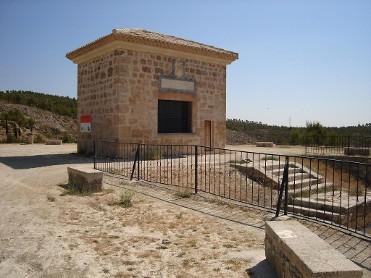
Caravaca de La Cruz
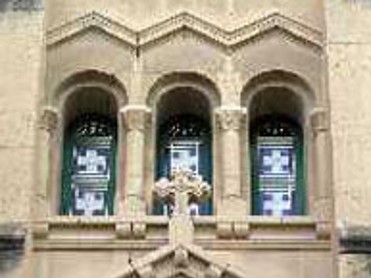
En el monte popularmente conocido en Caravaca de la Cruz con el nombre de “El Calvario”, al norte del Castillo-Santuario, se levanta la Ermita de la Reja, obra del siglo XVII y única conservada de las catorce que se construyeron y que constituían las estaciones del “Vía Crucis”. Fueron sus patronos y fundadores D. Francisco [Muso] Muñoz de Otálora, Corregidor de Caravaca, y Catalina López, su mujer; es una obra de 1617, tal como atestigua la inscripción que aparece en su dintel. Edificada en sillería y dispuesta sobre una extensión de terreno considerable, está cubierta por bóveda hormigonada de cal. Es de planta rectangular y cubierta a cuatro aguas cuyas lomeras descansan sobre una amplia cornisa. La fachada, que da nombre al edificio, tiene una gran reja de hierro forjado, a manera de ventana que es su única decoración. En el interior sólo se encuentra una sólida mesa de altar. Su ubicación constituye un punto privilegiado para una visión general de la ciudad. Su vista panorámica tanto de la ciudad como de la zona de montaña es una de las más atractivas de Caravaca de la Cruz.
Monuments
Archena
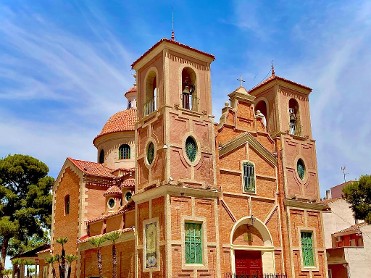
The Ermita del Balneario (the curative bath Hermitage) was built under the patronage of Virgen de la Salud, who is currently the patron saint of the town of Archena. It is a Neo-medieval building with Romanesque construction elements, but it has a sense of verticality which resembles the Gothic style. This feature is intensified by its entry, which is situated in the higher part of the building, a location which it is possible to reach thanks to the elegant Empire style staircase. Although the direction of works corresponded to the architect Jose Mª Aguilar, the project is attributed to the great artist Justo Millán. The beautiful and expensive calcareous stone, which covers all the main façade and is playfully combined with brick in the lateral walls, is a sign of the interest that the Viscounts of Rías, who were then the owners of the thermal baths, had in the construction of the hermitage. Inside the building stands out the barrel vault with transverse arches, which are leant on small double columns. The only altar that can be seen in the hermitage is devoted to the Virgen de la Salud, whose sculpture was made by Salvador Páramo, a religious image specialist. A noteworthy feature is the Cristo crucificado (a crucifix), made by Enrique Salas.

Monuments
Ricote
Se halla en el paraje de Rambla de Benito o Cuesta Egea, junto al alberque juvenil y un área deportiva. De esta robusta construcción rural destaca en su fachada, el acceso en forma de vano abocinado, enmarcado a ambos lados por dos ventanas vidriadas. Conjunto coronado por una espadaña con doble vano y campanario. En su interior se aprecian tres naves con columnas policromadas y un artesonado de madera muy rehabilitado. Preside la Virgen del Oro. Probablemente el topónimo Oro que se utiliza tanto para nombrar a la Virgen como la sierra cercana, tiene su origen en la raíz hebrea “or” que significa monte. Esta ermita celebra su romería el 15 de agosto, día de la Asunción de María.
Monuments
Molina de Segura
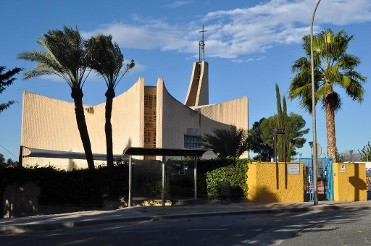
La solidaridad de los molinenses ha dado lugar a esta ermita de trazo moderno, que es donde se ubica la patrona de la localidad. Pese a estar siempre en el mismo lugar desde el siglo XV, el templo ha sufrido ciertas variaciones a lo largo de su historia. De la ermita anterior (1896) a la actual (1976) todavía se conservan imágenes. Por ejemplo, la de la Virgen de Nuestra Sra. de la Consolación es de época medieval. Fue destruida y sustituida por una similar de Bernabé Gil. Lo más característico de la zona es que en las inmediaciones de la ermita discurre el Río Segura y encontramos la Casa del Barco, casa que prestaba servicio al embarcadero del barco de baroma conocido entre otros nombres como barco de Leandro.

Monuments
Ricote
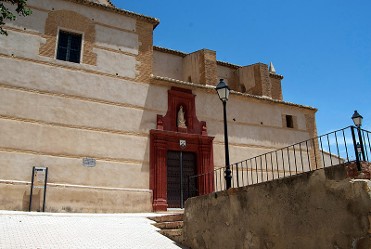
La Ermita de Nuestra Señora de las Huertas, situada en el municipio de Ricote, es uno de los enclaves históricos y patrimoniales más singulares del Valle de Ricote y uno de los principales testimonios de la transición entre la cultura islámica y cristiana en la Región de Murcia. Ubicada en un entorno tradicional de huerta y paisaje agrícola, esta construcción tuvo originalmente función de mezquita durante el periodo andalusí y aparece citada en los Libros de Visitas de la Orden de Santiago de finales del siglo XV como ¿una casa que solía ser mezquita¿, reflejando la importancia religiosa y cultural que tuvo este espacio para la población musulmana del valle. Los estudios históricos y arqueológicos señalan además que este enclave estuvo vinculado a la transmisión del pensamiento islámico sufí y a importantes figuras intelectuales relacionadas con Ricote, como Ibn Sabín y el sabio andalusí Al-Ricotí, convirtiéndose en uno de los lugares más relevantes del legado cultural andalusí conservado en el Valle de Ricote. Tras la conversión forzosa de los mudéjares al cristianismo en 1501, el edificio fue reutilizado como ermita cristiana bajo la advocación de Nuestra Señora de la Concepción, apareciendo posteriormente mencionada en 1511 como Santa María de las Huertas. Durante siglos sirvió como espacio religioso vinculado a la vida agrícola y espiritual de los habitantes de la huerta ricoteña. La ermita conservó una estructura de tres naves con techumbres de madera y un antiguo alminar transformado en campanario, además de diversos elementos arquitectónicos de origen islámico entre los que destaca la presencia de restos de un arco de herradura, símbolo visible de su pasado andalusí. Aunque actualmente el edificio se encuentra en estado de ruina y abandono, todavía se conservan parte de sus muros perimetrales y restos arquitectónicos que evidencian la importancia histórica y patrimonial del conjunto. De este antiguo santuario procede además la emblemática pila bautismal románica de 1683 que hoy se conserva restaurada en la Iglesia Parroquial de San Sebastián de Ricote. La Ermita de Nuestra Señora de las Huertas constituye hoy uno de los espacios más representativos para comprender la convivencia, transformación y superposición cultural entre el mundo islámico y cristiano en el Valle de Ricote. Su valor histórico, arqueológico y simbólico la convierte en un enclave fundamental dentro del patrimonio cultural de Ricote y de la Región de Murcia.
Monuments
Mula
This Hermitage was built, according to the tradition, on an ancient 1244 Arab mosque. Some centuries later, it was enshrined as the Hermitage of Nuestra Señora del Carmen, the actual patront saint of Mula. The hermitage is Baroque in style though it retains some aspects of the Middle Ages and Renaissance. In the eighteenth century, some works to adapt it to the baroque style were done. It is worth the tiles which beautify the dome.


