
Monuments
Colonia Julio Ruiz de Alda (San Javier)
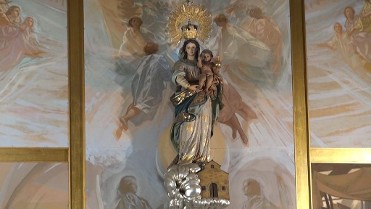
Church built in the 1970's with the aim of creating a military place of worship for all those workers and their families belonging to the ACADEMIA GENERAL DEL AIRE (AGA). The Virgin of Loreto or Our lady of Loreto is a Catholic Marian devotion, with her feast day celebrated on December 10th. She is the patroness of the Sapnish Air Force and aviation.
Monuments
Murcia
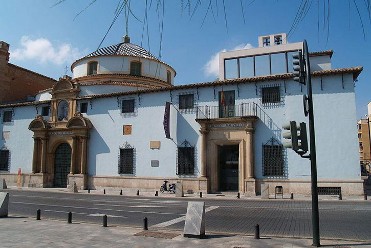
De planta octogonal, fue levantada hacia 1670 y concluida en los años finales del siglo XVII como iglesia propia de la Cofradía de Jesús. Es, sin duda alguna, el escenario de la escultura, un verdadero teatro pensado para mostrar los misterios de la pasión. Salzillo realizó para el recinto los famosos pasos procesionales de la mañana de Viernes Santo, logrando un escenario armónico entre arquitectura y escultura. En las tribunas se conservan todavía originales, las pinturas de Pablo Sístori, de 1792.
Monuments
Yecla
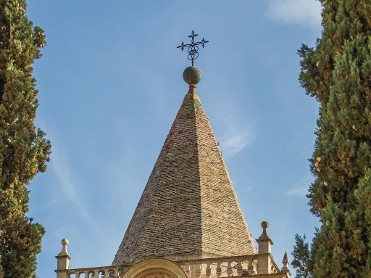
Esta iglesia se empezó a construir en el 1512, finalizándose cuarenta años después. De planta rectangular con unas dimensiones de 40 m de longitud por 14,5 de anchura. Consta de una sola nave de estilo gótico con bóveda de crucería y capillas laterales entre los contrafuertes. El trazado gótico de la nave se divide en cinco tramos y el sexto tramo es remacentista de forma poligonal, en cuya parte superior se encuentra el retablo mayor perdido en la primera mitad del siglo XVII.
Monuments
Caravaca de La Cruz
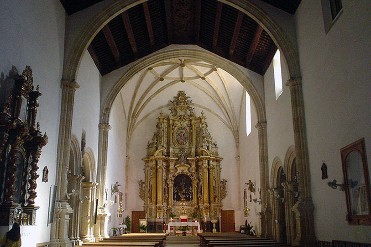
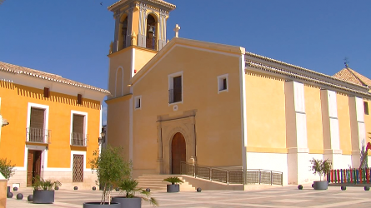
Its construction started in 1532 on the former church Cofradía Hospitalitaria San Juán de Letrán. It is a Renaissance building of unique beauty. Its semi-circular arches and pillars, which lead to the chapels which make the transept, account for the artistic innovations carried out. All of this due to the influence of El Salvador's work created in the same years. In its interior stands out the magnificent Mudejar coffered ceiling made of polychromatic wood from the 16th century. It has joined rafters that hold the semi-circular transverse arches. The main chapel, or "Capilla Mayor" made of masonry, is covered with a ribbed vault. And finally the Baroque altar from the 18th century with a statue of the Purísima Concepción by Francisco Fernández Caro, Salzillo's disciple. Likewise it is important to mention the so-called "Torre de los Pastores". This tower has four modules: three of them made of masonry and one of them made of solid bricks. The tower had a double mission; to inform a possible risk of incursion from its watchtower to the new castle nearby, and to work as a reference point for the shepherds of the area, therefore its name.
Monuments
Cehegín
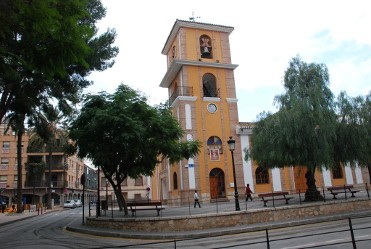
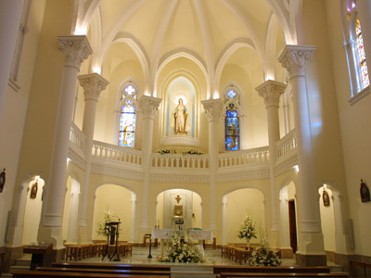
The exact date of construction of this church is unknown, although it is thought to have been built between the end of the 15th century and the beginning of the 16th century. The people of Cehegín are very fond of it, as it is the only one that stands on the highest hill in the historic centre of the municipality and is recognised as a National Monument. It is a Renaissance chapel. Its tower has an interesting clock. The interior naves are supported by Tuscan pillars and Ionic pillars in the presbytery. It has a rich Mudejar coffered ceiling, polychrome and with a large pineapple of muqarnas and stars in the ochava above the presbytery.
Monuments
Totana
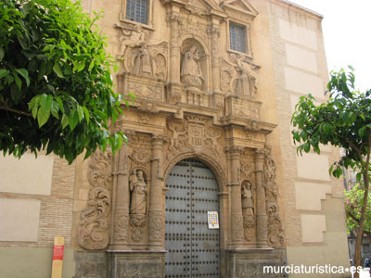
Edificación de gusto neogótico, levantada a finales del siglo XIX, sobre el solar que ocupó la ermita de la Concepción, primera de las iglesias construidas en Totana (1378). En lo que hoy es el jardín que la circunda estuvo situado anteriormente el Hospital de la Concepción, en donde la cofradía del mismo nombre, mantenía a su costa y con la ayuda de las limosnas de los vecinos las necesidades que, en la enfermedad y a la hora de la muerte, reclamaban los más pobres y necesitados. Muy cerca de allí se situó desde el siglo XVI la casa de la Encomienda, propiedad de la Orden Militar de Santiago, exponente de una institución de enraizada historia en Totana, ya que el rey Alfonso X el Sabio donó en 1257 las tierras de Aledo y Totana a esta orden militar a fin de asegurar en ellas el poblamiento, frente a la presencia árabe. Lamentablemente a mediados del pasado siglo esta noble vivienda fue derribada.
Monuments
Murcia
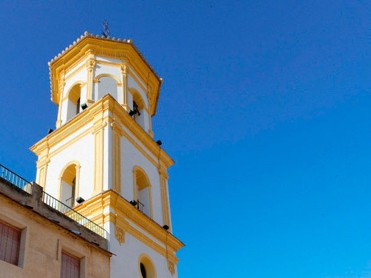
El Templo de la Merced pertenecía a la orden de los mercedarios, que se asientan en Murcia tras la reconquista de la ciudad en 1265. Desde 1560 establecen su convento e iglesia cerca de la Puerta Nueva, actual emplazamiento. Con la exclaustración en 1835 el Estado lo vendió a la familia Stárico y éstos a su vez en 1871 a Mariano Girada, son los descendientes de éste último quien en los años veinte se lo vendieron a los Maristas quienes finalmente se lo vendieron a la Universidad. Gran parte del edificio conventual con el claustro central forma parte del conjunto arquitectónico de la Universidad de Murcia, en su Campus La Merced. Los franciscanos tomaron posesión de los aledaños del convento e iglesia a partir de 1931, y en 1943 construyen la actual residencia conventual.
Monuments
Cehegín
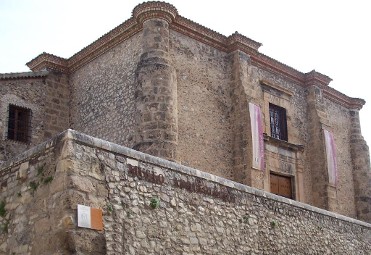
The masonry church is located at the western part of the town. Its façade lacks artistic interest, except for the tower that was built in 1788. The southwestern tower, located at the foot of the church, has three plastered parts. It is crowned by an iron weathervane with the Virgin of Solitude (symbol) and a glorious cross on top of it. The interior is divided into three naves separated by cruciform pillars that support semicircular arches. The hexagonal chapel is covered by a groin vault with a rosette in the middle. The high choir is located at the foot of the building. It is supported by a central column made of red jasper which probably comes from Begastri.
Monuments
Caravaca de La Cruz
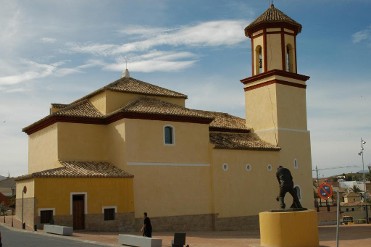
It was the first church in Caravaca, built inside the former walled enclosure and restored later in the 16th century. Nowadays the church is a local archaeological museum. In its interior, several archaeological materials from the Palaeolithic Period until the Middle Ages are exhibited, standing out those from la Encarnación complex.
Monuments
Calasparra
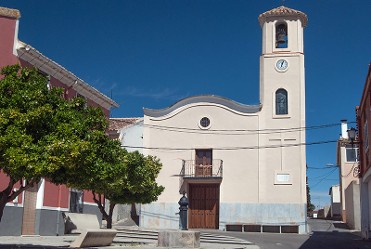
Pequeña iglesia de planta de cruz latina. Situada en la plaza del mismo nombre. Construida en el s. XVI, fue restaurada en 1803 y posteriormente en 2006. En su interior podemos encontrar un retablo de estuco del siglo XVIII, que alberga la imagen de ambos. Dedicada al culto de los santos Abdón y Senén, patronos de la villa. Cada 30 de julio y, desde el s. XVI, se celebran las fiestas en honor a Los Santos Mártires San Abdón y San Senén, patronos de Calasparra. Entre otros, disfrutamos de eventos tales como actuaciones, conciertos musicales, fiesta joven de las Peñas, el tradicional concurso de migas, la procesión de los Patronos y la monumental Corrida de Toros.
Monuments
La Copa (Bullas)
El lugar más destacado de La Copa de Bullas fue originalmente una pequeña ermita dedicada a San José que terminaría siendo puesta bajo la advocación de Nuestra Señora de la Consolación, patrona de la pedanía, en el siglo XVIII. En 1899 el templo alcanzó su extensión actual tras unas importantes obras de remodelación en las que jugaron un activo papel los marqueses de Pidal. Pocos años después, en 1904, la iglesia de La Copa fue erigida en parroquia y finalmente, ya en 1926, se construyó la torre que le proporciona la impronta característica que hoy posee. La primera década del siglo XXI fue testigo de la última gran restauración interior que el edificio ha vivido.
Monuments
Murcia
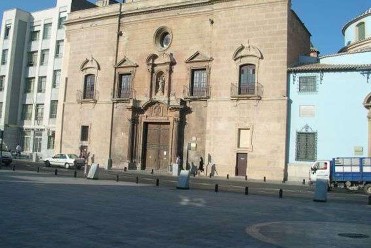
Antiguo convento de San Agustín, está ligado a la historia de la ciudad por interesantes testimonios. Concluida hacia 1689, la disposición de su planta obligó a reubicar la Capilla de la virgen de la Arrixaca en un recinto centralizado -a modo de la iglesia dentro de una iglesia- que habría que destacar la importancia de la imagen medieval. La decoración de yeserías y la autonomía espacial incorporada a las otras naves dan cuenta del rango asignado a la misma. La iglesia cuenta con importantes obras de Salzillo: San Andrés y San Roque.
Monuments
Cehegín
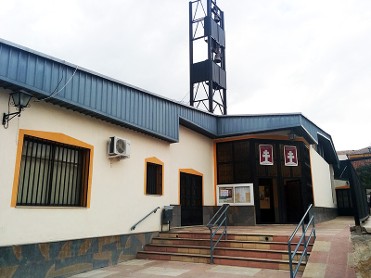
A modern church in which no consideration has been given to any ancient style. The focus was exclusively on functionality.
Monuments
Murcia
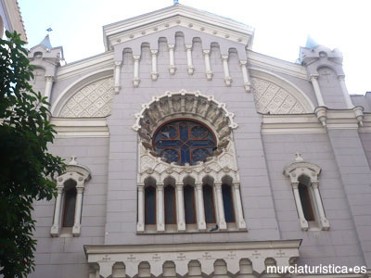
En el solar que ocupa la iglesia de San Bartolomé se han desarrollado las más diversas manifestaciones arquitectónicas de carácter religioso. Desde el siglo XI en el que figura una antigua mezquita y posible cementerio musulmán, pasando por parroquia de diversas características y dimensiones, hasta el diseño y construcción, a finales del siglo XVIII, de su planta definitiva, demoliendo previamente el edificio del siglo XVII, excepto la portada lateral. Arruinado este primitivo templo parroquial, comenzó la obra del actual el 24 de agosto de 1767, terminándose a finales del siglo XIX, según consta en la lápida dedicada a la memoria del sacristán Don José Ferrer Céspedes (que siendo sacristán de la parroquia inició la obra de reconstrucción del templo y falleció en 1889), colocada al pie de la torre. El estilo inicial del templo es neoclásico. Cuando Justo Millán se hace cargo de la obra, ésta se encontraba en diversas fases constructivas. Este arquitecto continúa la obra según el estilo preestablecido, permitiéndose el capricho de diseñar la fachada en el más puro eclecticismo, llamado también estilo Villajos. Los Frescos que decoran el Altar Mayor de la Igleisa son obra del importante pintor loquino Manuel Muñoz Barberán que aportó con su pintura a embellecer la Iglesia. La Iglesia posee en su interior una gran colección de Imaginería murciana, algunas de los más importantes escultores Murcianos, La Virgen de las Angustias de 1740-1741 la cual se localiza en su Capilla privativa, el conjunto escultórico es obra de Francisco Salzillo y Alcaraz al igual que la bella imágen del Patrón de los Plateros San Eloy. Otros conjuntos escultóricos como el del Santo Sepulcro obra de Gónzalez Moreno se localiza en su respectiva Capilla.
Monuments
Lorca
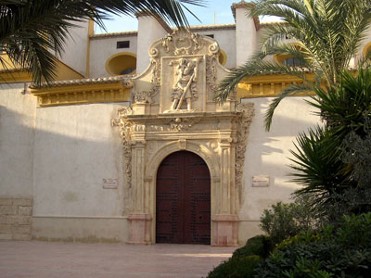
Está situada en el barrio de San Cristóbal. En 1627 se documenta la construcción de alguna capilla y será en 1651 cuando se contrate la primera fachada, hoy desaparecida, con el cantero Alonso Pérez Crespo. Se trata de una obra de líneas sencillas e influencia herreriana patente en el frontón recto partido y las pirámides con bolas. Este modelo de puerta va a ser común en Lorca, perdurando desde comienzos hasta finales del siglo XVII. Durante toda la segunda mitad del siglo XVII se construyen las capillas laterales y en 1714 se contrata el retablo mayor con Manuel Caro. Entre 1742 y 1744 debieron de ser rehechas la torre, capillas anejas, crucero y bóveda de la capilla mayor. Antes de que finalizara el XVIII se levantan también la sacristía (de curiosa planta ochavada) y la nueva portada, a modo de retablo y dentro de los gustos del rococó, cuya labra es atribuible a los Uzeta. La iglesia sufrió grandes daños con la riada de 1802 y su torre actual data de la tercera década del XIX. Todo el interior también hubo de ser redecorado tras la guerra civil.

Monuments
Lorca
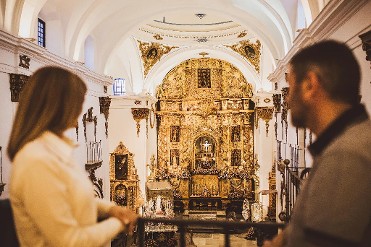
Almost nothing has been preserved of the architecture inaugurated in 1565, as the temple underwent a total reform at the end of the 17th century, to which a later decoration based on rock gardens and symbols of the order on the hanging pendentives was added. The façade, with strictly classicist lines, was completed in 1638 by the stonemason Juan Garzón. Some paintings by the Loquine painter Camacho Felices are interesting, as well as the set of Baroque altarpieces housed in the head of the building. The high altarpiece is worthy of special mention. It was commissioned by Ginés López in 1694. The two main altarpieces in the transept, both attributed to Jerónimo Caballero, are dedicated to San Antonio and to Vera Cruz y Sangre de Cristo. They were dated around the fourth decade of the 18th century. The small altarpiece on the Gospel side contains the image of the Virgen de los Dolores, head of the Hermandad de Labradores (Paso Azul), a work by the Valencian José Capuz from 1941.
Monuments
Yecla
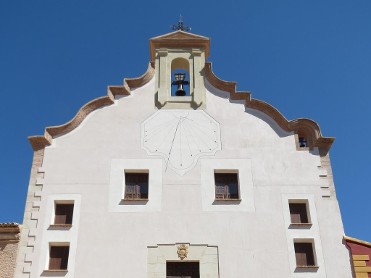
La Iglesia de San Francisco, fue construida por los franciscanos a finales del siglo XVI, destacando la magnífica espadaña. La Capilla de Las Angustias, de principios del siglo XVIII es una joya del barroco levantino con un admirable camarín de azulejería valenciana con columnas salomónicas que centraban la imagen titular y una bóveda colgante de cuatro arcos de medio punto convergentes y totalmente suspendidos.
Monuments
Caravaca de La Cruz
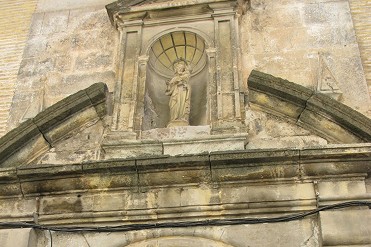
Founded by Saint Teresa of Jesus in 1576. The building has two different parts: the church and the monastery of Carmelite nuns. The church, a one nave building, was rebuilt in the 18th century with a baroque decoration.


