Natural areas
Yecla
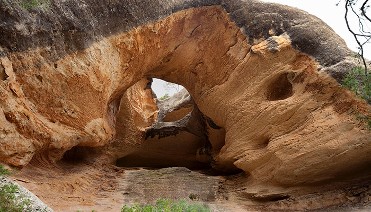
Gran estructura pétrea con paisaje de gran belleza y singularidad. Llaman la atención los fenómenos erosivos que han provocado en las paredes rocosas: huecos, cuevas, abrigos y superficies horadadas con forma de panal o alveolar. Una zona de indudable valor arqueológico, en la que destacan la Cueva del Mediodía y Cantos de Visera, así como las insculturas denominadas cazoletas, al pié del Monte conocido como de los Moros o Arabilejo, en el que se inspiran numerosas leyendas. La vegetación está dominada por el pino carrasco (Pinus halepensis), aunque se encuentran algunas encinas en umbrías y numerosas especies de flora, algunas de ellas endémicas. Cuenta con abundante y variada fauna de invertebrados, reptiles y mamíferos. Aunque sobre todo destaca por contar con la mayor diversidad de aves del altiplano Jumilla – Yecla. Acceso: Se realiza por la Ctra. RM-404 Yecla-Fuenteálamo. A unos 15 kilométros se toma un desvío a la derecha por un camino asfaltado (en el cruce hay varias señales indicativas del Monte Arabí, Casa del Conde y otras). A 1,4 km, justo al pasar la Casa del Conde o de Don Lucio, se toma a izquierda un camino de tierra que se dirige al Monte Arabí. Siguiendo ete camino, a unos 3 km, se encuentra la Casa del Guarda, donde se encuentra el punto de información. Tambien puede accederse por la Ctra. A-18 Yecla- Montealegre del Castillo. Por este último acceso están más cerca las dos estaciones de arte rupestre: Cantos de Visera y Cueva del Mediodía. Ambas están incluidas en la Declaración de Patrimonio de la Humanidad para el Arte Rupestre del Arco Mediterráneo, por la UNESCO en el año 1998. Estas manifestaciones pictóricas nos situarían en una secuencia cronológica entre el VI y el II milenio a.C., siendo el estilo naturalista levantino (Cantos de Visera I y II) el más representativo dentro del conjunto de estilos identificados y que nos situaría en un momento de actividad Neo-Eneolítico, a caballo entre el IV y III milenio a.C. La Visita a las pinturas rupestres Cantos de Visera del Monte Arabí, siempre requerirá la presencia de un guía acompañante. Los servicios de guías se ofertan a grupos de un mínimo de 15 y un máximo de 25 personas y deberán ser concertados con 48 horas de antelación. 968790901 (atención al público de lunes a viernes de 09.00 a 13.00 horas) o museoarqueologicodeyecla@gmail.com
Hotels
Murcia
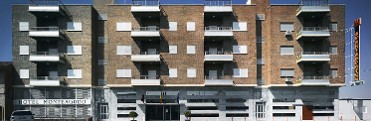
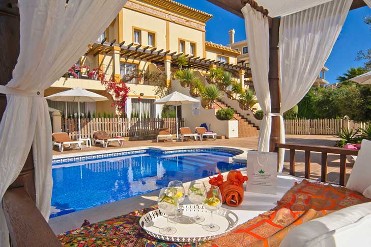
Hotel Monteagudo, está situado en el marco incomparable de Monteagudo, presidido por el castillo de origen árabe y la imagen del Cristo, muy cerca de Murcia. El hotel consta de los últimos avances tecnológicos en materia de comunicación y ahorro de energía, como el uso de LED¿s en sustitución de las bombillas convencionales, o el circuito de agua descalcificada a través de nuestra depuradora, que garantiza la mejor calidad al servicio del confort de nuestros visitantes.

Monuments
Cartagena
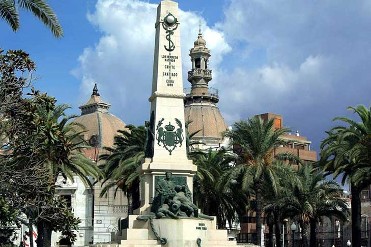
The monument was made by public subscription, headed by King Alfonso XIII himself. The location in Cartagena was decided because it was the starting point for the fleet of Cuba and for being the place of origin of a large part of the contingents of the troops. The monument, made by the sculptor Julio González Pola in marble stone sape as pyramid, with the reliefs and the coat of arms in black marble , on the main faces present two allegorical groups and on the main part the coat of arms of Spain in bronze. other marine elements complete the decoration . In 1982 the monument to the Heroes of Cavite and Cuba was restored, replacing the allegorical groups with replicas in bronze and just as the original work, the restoration was financed with public and private subscriptions.
Monuments
Cartagena
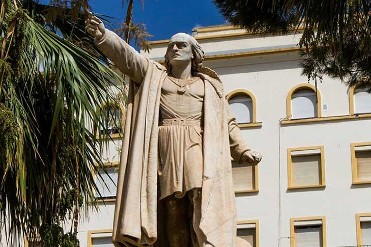
The monument to Columbus was commissioned by the Minister of the Navy, Francisco Paula Pavia in 1882 to place it in the Arsenal. The Spanish sculptor Juan Sanmartin y Serra made it in Carrara marble in the city of Genoa. In 1900 the statue was ceded to the City Council, but it was not placed until the urbanization of Muralla del Mar. The pedestal was designed by the architect Lorenzo Ros in 1920. The statue represents Columbus with his arm extended pointing to land, which is the iconography most widespread of the sailor in statues.
Monuments
Cartagena
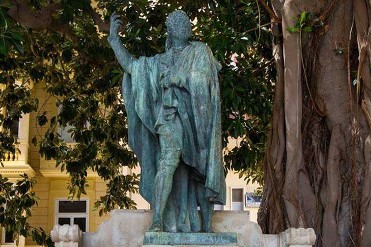
During mayor Torres mandate several sculptures were made to praise and remember the feats and virtues of illustrious people of the city throughout history, that is why the centre of the Plaza San Francisco (“San Francisco Square”) is adorned since 1927 with the statue of the Cartagena actor Isidoro Máiquez, made by the Valencian José Ortells, who had been a student of Benlliure and First Medal of the National Exhibition of Fine Arts of 1917.
Monuments
Abanilla
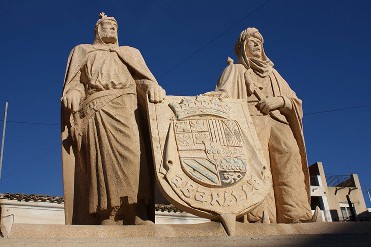
The stone carving is made by the local artist Cayetano Ramirez Lopez. This monument commemorates the Festival of Moors and Christians, declared as a Regional Touristic Interest event. Every 1st of May, the parade “Parada de Kábilas y Mesnadas” takes place, which is the biggest celebration.
Monuments
Abanilla
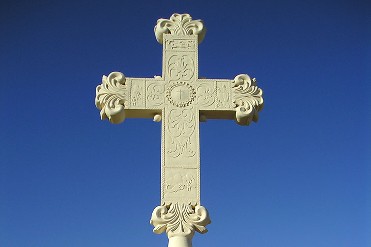
This monumental image of the Patron of Abanilla, of the welcome to locals and visitors remembering the passion and sentiment of the abanillero by the Holy Cross. It is located on the MU-414 road, from entrance to Abanilla, sculpted by local artist Juan Francisco Gómez de Albacete. Takes more than 11 meters of altitude and 6 meters of altitude. In 2022 it was integrated into corporate letters with the number of ABANILLA, subsidized by the Concejalía de Industria, Empleo, Comercio y Turismo del Ayuntamiento de Turismo.

Monuments
Ricote
Monumento colocado en el año 2013 en honor a la expulsión de los moriscos en 1613, que afectó la mitad de la población, coincidiendo con la conmemoración del 400 aniversario de la expulsión. Ricote fue el último lugar de España del que fueron expulsados los moriscos en 1613. De ellos, nos han quedado restos en la ermita, el callejero de Ricote, el sistema hidráulico y la mayor parte de los apellidos con los que se nominaron tras la conversión de 1501 siguen siendo utilizados en Ricote.
Monuments
San Javier
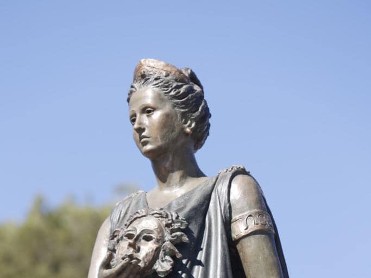
Life-size bronze sculpture of the Greek muse of theater, Melpomene, created by Juan José Quirós, which presides over the Spanish Aviation Avenue next to Almansa Park. A statue that pays tribute to the 50th anniversary of the International Festival of Theater, Mursic, and Dance in San Javier.
Monuments
Santiago de La Ribera (San Javier)
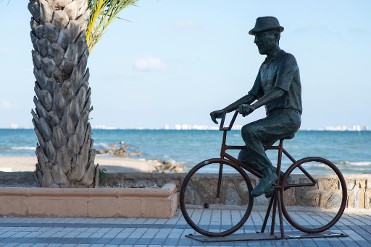
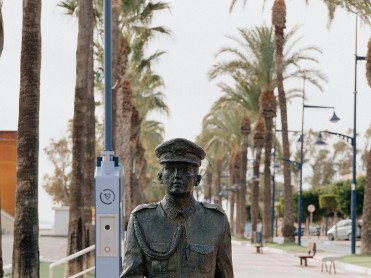
Statue to the Cadet. The statue was made of bronze by Manuel Páez, and it reproduces what has been a habitual image in the coastal landscape since 1945. It is located in Colón promenade in Santiago de la Ribera. With this image, the Town Hall wants to pay homage “to the new students of AGA who come to San Javier with a dream”. The walking life-size statue has the sea in the background, and is situated at a few metres from the AGA. Since the first year in 1945, there have been near 7000 cadets who have been part of the Air Force and the AGA later on.
Monuments
Santiago de La Ribera (San Javier)
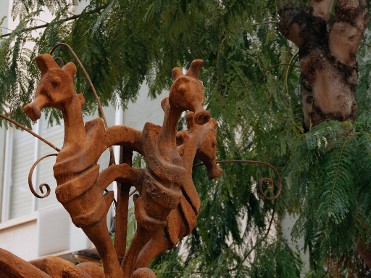
The sculpture is the work of the Matiss Creacción collective and represents a carnival mask, crowned by three seahorses, a characteristic animal of the Mar Menor, chosen as the mascot of the local carnival. Located on a bustling street in the town, the sculpture aims to revive, at any time of the year, the spirit of the carnival that fills the town during these days. This tradition dates back to the 1940's when the festivities were alrerady part of the town's life. The carnival was institutionalized in 1988, following an initiative by the association of housewives at the time, marking the100th anniversary of the town's establishment.
Monuments
San Javier
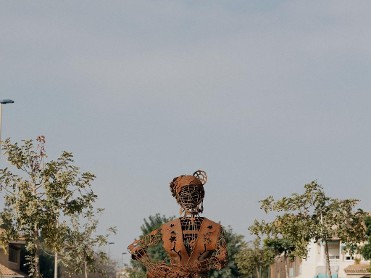
The life-size sculpture of a "huertana" in embossed iron, crafted by the Alicante artist Manu Moya, is located on Neptuno Avenue in San Javier. It commemorates the 50 years that have passed since 1967 when the then parish priest of the locality, Antonio López, originally from Patiño, Murcia, established the Mar Menor Choirs and Dances group in San Javier.
Monuments
La Unión
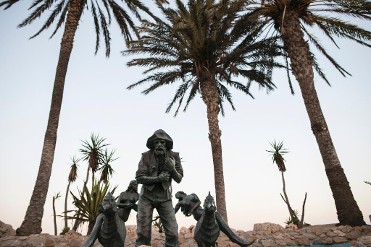
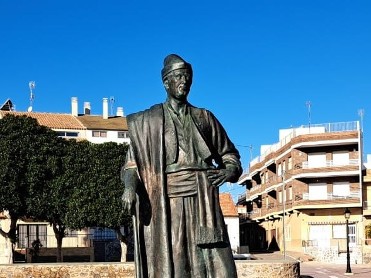
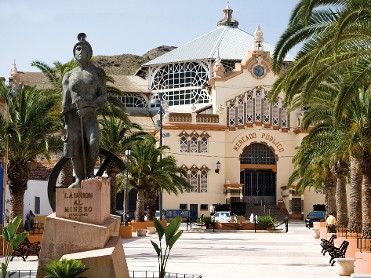
Monumento homenaje a los mineros de la Sierra Minera de La Unión-Cartagena. Escultura de Esteban Bernal
Monuments
Santiago de La Ribera (San Javier)
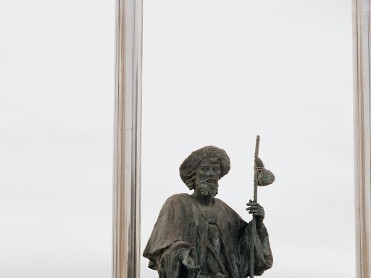
It's a bronze statue represnting Saint James the Aposltle as a pilgrim. "Tribute to the Pilgrim" was created by Juan José Quirós. The artwork rests on a stone on which the Association of the Camino de Santiago in Santiago de la Ribera has marked the kilometer 0 of the Jacobean route between Santiago de la Ribera and Santiago de Compostela.